

Welcome to the IKCEST
How to turn your big idea into an app that works

If your extended lockdown has led you to learn a bit about application development or you’ve come up with a winning idea for an app, how do you convert that winning idea into a viable application for yourself or your business?

Demand for mobile apps

If you’ve spent browsing the mobile app stores, you will have realised that there are literally millions of apps in there. I was amazed to learn that the Google Play Store is approaching 3 million apps. 
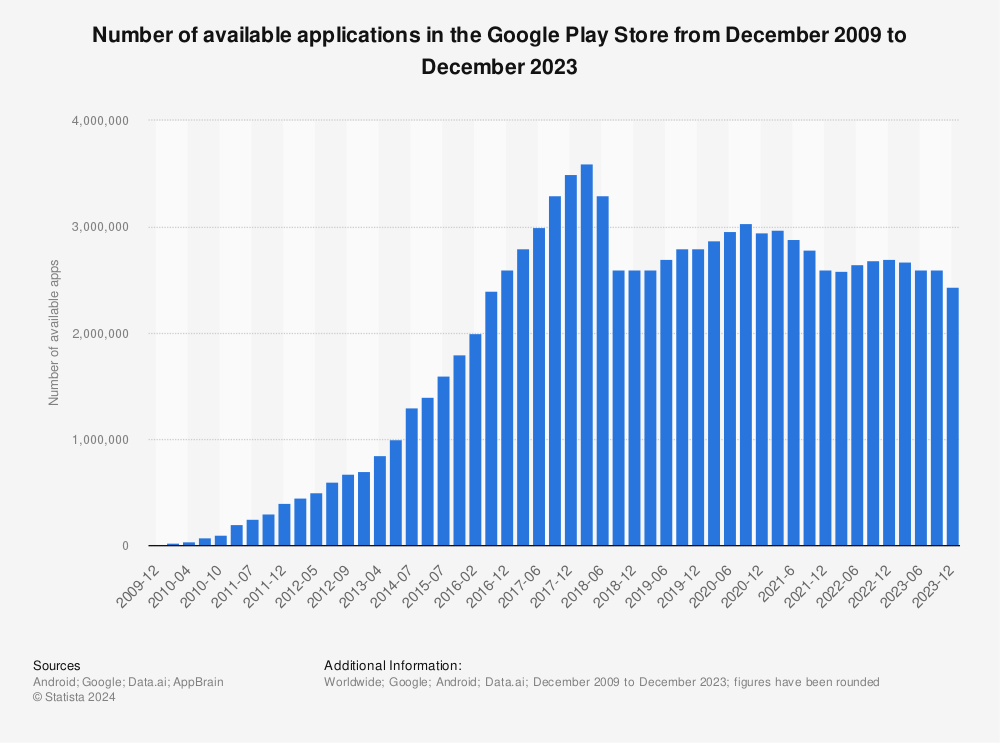
Statistic: Number of available applications in the Google Play Store from December 2009 to June 2020 | Statista
Find more statistics at Statista

From experience, you’ll know that these apps range from really good to practically unusable. This is not unique to mobile app development. Too many app developers spend too much time building their apps; too little finding out if what it does is something the market is looking for.

So, if you’re looking to create an app that adds value and fits in with your vision, you’ll need to put some effort into ensuring that your app does what it’s meant to; and more importantly, that there’s a demand for it.

Early prototyping

Bluegrass Digital CEO Nick Durrant advocates early prototyping so that you can expose your idea to your potential customers as early as possible.

Creating prototypes early in projects will help developers add valuable quality of life improvements as they build subsequent iterations of the app. 

According to Durrant, prototyping is an essential step in understanding the user requirement; it has to happen before one can begin to design the final solution.

User interaction

This prototyping can take various forms; the most important thing is that the users get to interact with it as this will inform the direction of development.

These prototypes also don’t need to be technical marvels. The prototyping should take as many forms as needed and should avoid too much complexity. Prototypes need not be over-engineered; they should be as simple as possible for their purpose.

Tools of the trade

When putting together prototypes, there are many tools that can be utilised these include using a storyboard, role-playing, bodystorm (which is a combination of role-playing and brainstorming), concept art and wireframes.

If you’re looking to create an app as an individual or company, this is a great time to do it but proceed with caution. No matter how good your app idea seems to you, only your users will be able to tell you if there’s actually a market for it.

Also read: Five photo editing apps for mobile to boost creativity during lockdown

DMCA.com Protection Status

Original Text (This is the original text for your reference.)

If your extended lockdown has led you to learn a bit about application development or you’ve come up with a winning idea for an app, how do you convert that winning idea into a viable application for yourself or your business?

Demand for mobile apps

If you’ve spent browsing the mobile app stores, you will have realised that there are literally millions of apps in there. I was amazed to learn that the Google Play Store is approaching 3 million apps. 

Statistic: Number of available applications in the Google Play Store from December 2009 to June 2020 | Statista
Find more statistics at Statista

From experience, you’ll know that these apps range from really good to practically unusable. This is not unique to mobile app development. Too many app developers spend too much time building their apps; too little finding out if what it does is something the market is looking for.

So, if you’re looking to create an app that adds value and fits in with your vision, you’ll need to put some effort into ensuring that your app does what it’s meant to; and more importantly, that there’s a demand for it.

Early prototyping

Bluegrass Digital CEO Nick Durrant advocates early prototyping so that you can expose your idea to your potential customers as early as possible.

Creating prototypes early in projects will help developers add valuable quality of life improvements as they build subsequent iterations of the app. 

According to Durrant, prototyping is an essential step in understanding the user requirement; it has to happen before one can begin to design the final solution.

User interaction

This prototyping can take various forms; the most important thing is that the users get to interact with it as this will inform the direction of development.

These prototypes also don’t need to be technical marvels. The prototyping should take as many forms as needed and should avoid too much complexity. Prototypes need not be over-engineered; they should be as simple as possible for their purpose.

Tools of the trade

When putting together prototypes, there are many tools that can be utilised these include using a storyboard, role-playing, bodystorm (which is a combination of role-playing and brainstorming), concept art and wireframes.

If you’re looking to create an app as an individual or company, this is a great time to do it but proceed with caution. No matter how good your app idea seems to you, only your users will be able to tell you if there’s actually a market for it.

Also read: Five photo editing apps for mobile to boost creativity during lockdown

DMCA.com Protection Status
Comments

    Something to say?

    Log in or Sign up for free

    Disclaimer: The translated content is provided by third-party translation service providers, and IKCEST shall not assume any responsibility for the accuracy and legality of the content.
    Translate engine
    Article's language
    English
    中文
    Pусск
    Français
    Español
    العربية
    Português
    Kikongo
    Dutch
    kiswahili
    هَوُسَ
    IsiZulu
    Action
    Related

    Report

    Select your report category*


    Reason*


    By pressing send, your feedback will be used to improve IKCEST. Your privacy will be protected.

    Submit
    Cancel