Hands up anyone who, like me, have ever wondered what the deal is with those little bumps on your F and J keys. That’s actually a lot of people; Ok you can put them down, preferably in such a way that your index fingers feel those bumps. If you look down at your hands now you’ll see that they’re positioned such that your fingers can reach each and every one of the keys on the keyboard.
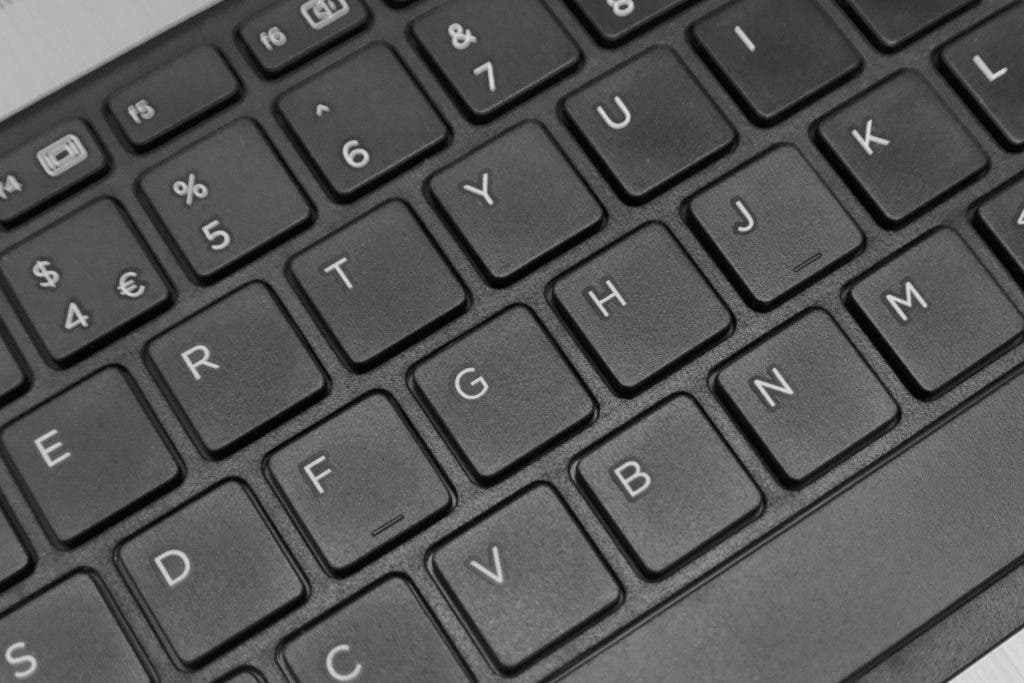
And make all the other keys envious.
Image credits Kevin Phillips.
This is why the F and J keys became known as “home keys,” but those tiny protrusions don’t really have a name. They’re referred to as anything from bumps to nipples to a host of other funny names — there’s even a reddit page dedicated to christening them. They were invented and patented in April of 2002 by June L. Botich, who was responsible for several other improvements to the modern keyboard.
“The keys of a keyboard are enhanced or modified, to improve or instill a tactile sensation to a person doing the typing. In this respect, certain of the keys are modified by adding tactile edges to the keys,” the invention’s abstract reads.
Those little bumps were a huge success — virtually all keyboards today are produced with “tactile edges” as default. The idea behind them is to give you a tangible response when your fingers touch the home keys, so you don’t have to keep looking at the keyboard — thus called “touch typing”. If you type the old-fashioned two-finger way, they probably won’t do you much good. But for someone who has to do a lot of typing really fast, say a writer for a stunningly successful science website, they’re a godsend. So I’m very thankful for them.
Apart from improving your typing speed and letting you focus your eyes on the screen in front of you, they also help you find home row. This is the position where your fingers should naturally come to rest after you’re finished typing. Home row is actually one of the first lessons thought to people who want to increase their typing speeds, and the F&J bumps go a long way in positioning your hands correctly.
Original Text (This is the original text for your reference.)
Hands up anyone who, like me, have ever wondered what the deal is with those little bumps on your F and J keys. That’s actually a lot of people; Ok you can put them down, preferably in such a way that your index fingers feel those bumps. If you look down at your hands now you’ll see that they’re positioned such that your fingers can reach each and every one of the keys on the keyboard.
And make all the other keys envious.
Image credits Kevin Phillips.
This is why the F and J keys became known as “home keys,” but those tiny protrusions don’t really have a name. They’re referred to as anything from bumps to nipples to a host of other funny names — there’s even a reddit page dedicated to christening them. They were invented and patented in April of 2002 by June L. Botich, who was responsible for several other improvements to the modern keyboard.
“The keys of a keyboard are enhanced or modified, to improve or instill a tactile sensation to a person doing the typing. In this respect, certain of the keys are modified by adding tactile edges to the keys,” the invention’s abstract reads.
Those little bumps were a huge success — virtually all keyboards today are produced with “tactile edges” as default. The idea behind them is to give you a tangible response when your fingers touch the home keys, so you don’t have to keep looking at the keyboard — thus called “touch typing”. If you type the old-fashioned two-finger way, they probably won’t do you much good. But for someone who has to do a lot of typing really fast, say a writer for a stunningly successful science website, they’re a godsend. So I’m very thankful for them.
Apart from improving your typing speed and letting you focus your eyes on the screen in front of you, they also help you find home row. This is the position where your fingers should naturally come to rest after you’re finished typing. Home row is actually one of the first lessons thought to people who want to increase their typing speeds, and the F&J bumps go a long way in positioning your hands correctly.




 User Center
 My Training Class
 Feedback






 Report
 Share
Share





Comments
Something to say?
Log in or Sign up for free