

Welcome to the IKCEST
Hawk-eye took 25 years. How long will the AI coach take?

Editor's note: Artificial intelligence is giving coaches new ways to analyze athletic performance, but turning data into better training remains a challenge. Liu Haoyang, a professor at Beijing Sport University and co-founder and CEO of motion capture company Noitom, examines how these tools are being used and what it will take to make them reliable coaching aids. The article reflects the author's opinions and not necessarily the views of CGTN.
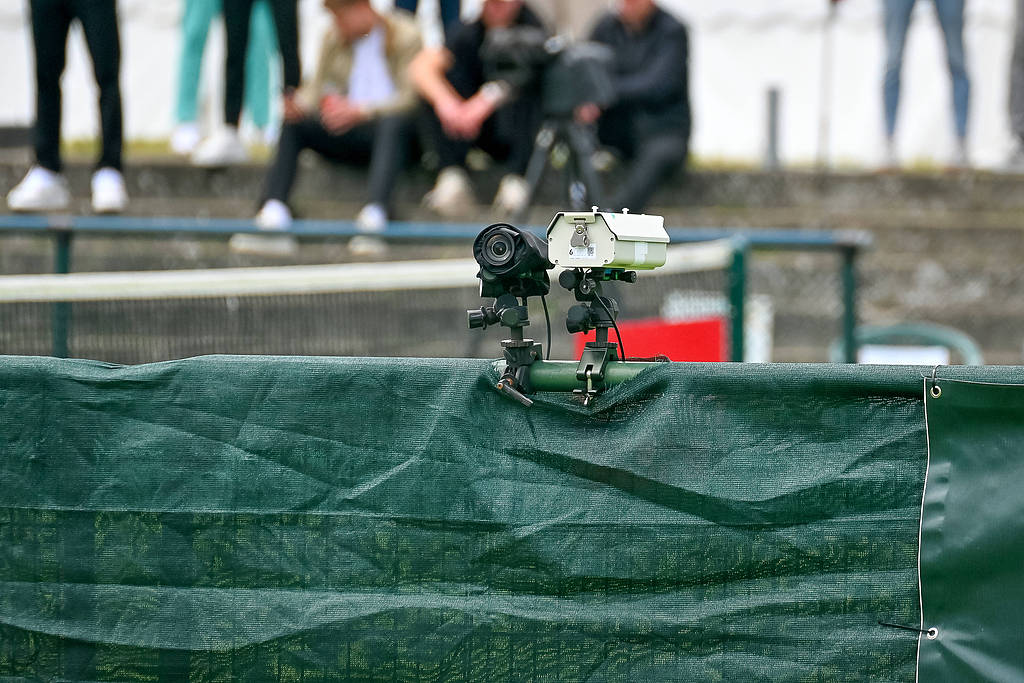
Cameras and equipment used for Hawk-Eye electronic line calling at the Terra Wortmann Open in Halle, Germany, June 16, 2026. /VCG

Cameras and equipment used for Hawk-Eye electronic line calling at the Terra Wortmann Open in Halle, Germany, June 16, 2026. /VCG

On October 11, Zheng Qinwen defeated Mirra Andreeva to win the 2026 China Open, becoming the first Chinese player to claim the women's singles title. Spectators may barely have noticed an absence: no line judges calling balls in or out. Every call came from an electronic system, instantly, without a raised arm. Hawk-Eye appeared in cricket television coverage in 2001 and reached tennis in 2006 as a way to review disputed calls. In 2017, the Next Gen ATP Finals tested live electronic line calling without line judges. The Australian Open and US Open followed in 2021; Wimbledon and the ATP Tour completed the switch in 2025. From broadcast visualization to officiating authority took nearly a quarter-century.

One Grand Slam remains an exception. At Roland-Garros on May 31, a crucial shot in Casper Ruud's match against João Fonseca was ruled in after an inspection of its clay mark, although television tracking suggested it was out. French Open director Amélie Mauresmo defended retaining human line judges, arguing that changing clay surfaces raise questions about electronic accuracy. The dispute shows that technical capability does not automatically produce trust. For AI in coaching, the challenge goes further: How can it help coaches turn measurement data into decisions that improve athletes’ performance?

What technology can measure

Meanwhile, technologies for analyzing athletic performance are advancing rapidly. At the Milano Cortina Winter Olympics earlier this year, 14 cameras recording in 8K circled the figure-skating rink supported AI-driven 3D tracking, producing near-real-time measurements of jump height, airtime and blade angle. Related technology was used at the 2022 Beijing games. Meanwhile, the International Skating Union has been testing computer-vision tools to help technical panels assess jump rotations and take-off edges. These applications do not yet show better training, but they do show measurement moving beyond the laboratory.

Some single-purpose technologies are already established in elite sport. Australian company Catapult reports that its systems serve more than 5,000 teams across over 40 sports, tracking running distance, velocity and acceleration loads. In China, Baidu worked with the national diving team on rapid video replay and AI-assisted technical analysis of movements that unfold between take-off and water entry in less than two seconds. Motion analysis was also widely used by China's figure-skating support teams in preparation for the Beijing Winter Olympics. Such tools reveal details difficult to observe by eye and help compare performance across sessions.
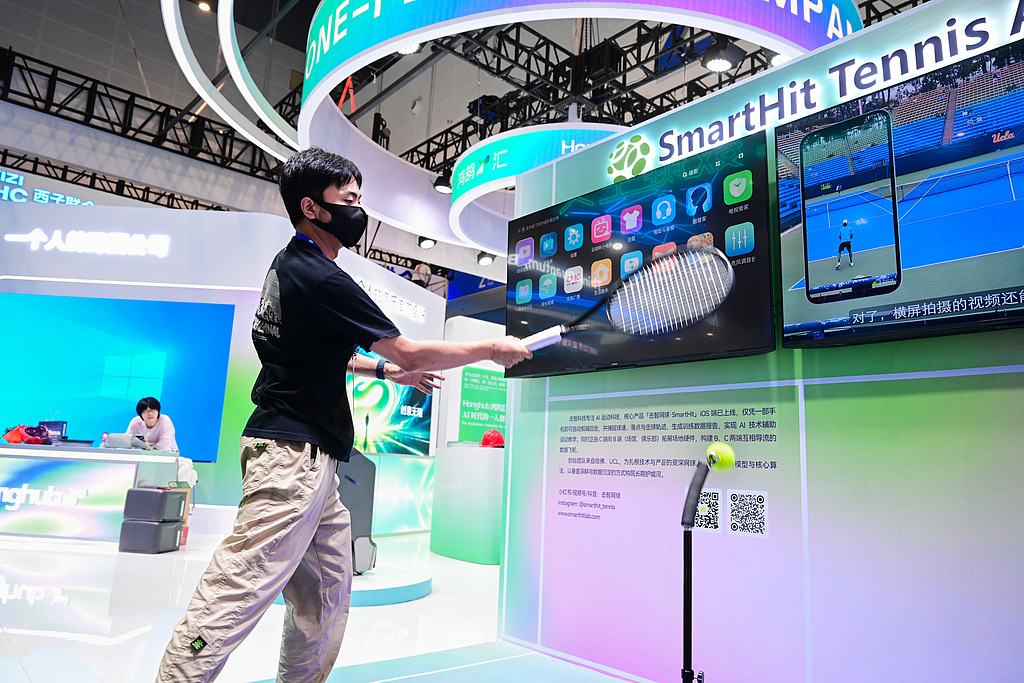
A reporter tries an AI-powered tennis app that records and assesses players' strokes and offers tips for improvement, September 20, 2026. /VCG

A reporter tries an AI-powered tennis app that records and assesses players' strokes and offers tips for improvement, September 20, 2026. /VCG

Why measurement is not enough

But measurable does not necessarily mean trainable. Devices can be expensive, complicated to use and difficult to integrate; data on how hard athletes train, how they move and how their bodies respond are often stored in separate systems. Turning those numbers into useful guidance still requires sports scientists and experienced coaches. Even the measurements need scrutiny. A recent analysis of camera-based motion capture during jumping found that estimated joint angles could be off by about 4-5 degrees, and sometimes more. To a coach, this raises a practical question: If an athlete's knee angle appears to change by five degrees, is it a real improvement or just measurement error? In elite sport, such uncertainty can obscure a technically meaningful change. There is no universal ideal technique: anatomy, injury history and competitive demands all matter.

There is a deeper scientific challenge. Discovering that a variable correlates with performance does not establish that changing it will improve performance. Injury prediction offers a cautionary example. A review in the British Journal of Sports Medicine found that some machine-learning models appeared highly accurate but gave warnings too broad or too far in advance to guide a coach's next training session. A truly reliable AI model that can predict an individual athlete's injury risk remains more an ambition than a reality.

From analysis to coaching decisions

Artificial intelligence is beginning to cross that boundary between description and recommendation. In 2024, Google DeepMind and Liverpool FC published TacticAI, which predicts aspects of corner kicks and proposes alternative player positions. In a blinded expert assessment, its suggestions were preferred to existing tactical setups 90 percent of the time. That demonstrates the plausibility of AI-generated options, not proof of more goals or victories—at the time of publication, no Liverpool player had yet tried them on the pitch. China is pursuing related approaches. Researchers at the Chinese Academy of Sciences' Institute of Automation, working with teams at Beijing Sport University, have explored football simulation, tactical situation analysis and models of how alternative decisions might change the development of play. These studies shift attention from "what happened?" toward "what else could happen?"

The 2026 FIFA World Cup offered another glimpse of the next stage. FIFA AI Pro, developed with Lenovo, brought official event and tracking data together with match video in a conversational assistant. FIFA reports that all 48 participating teams used it. A coach or analyst could ask a question rather than navigate several specialist dashboards. This could benefit teams with limited specialist staff, provided the answers are verifiable.
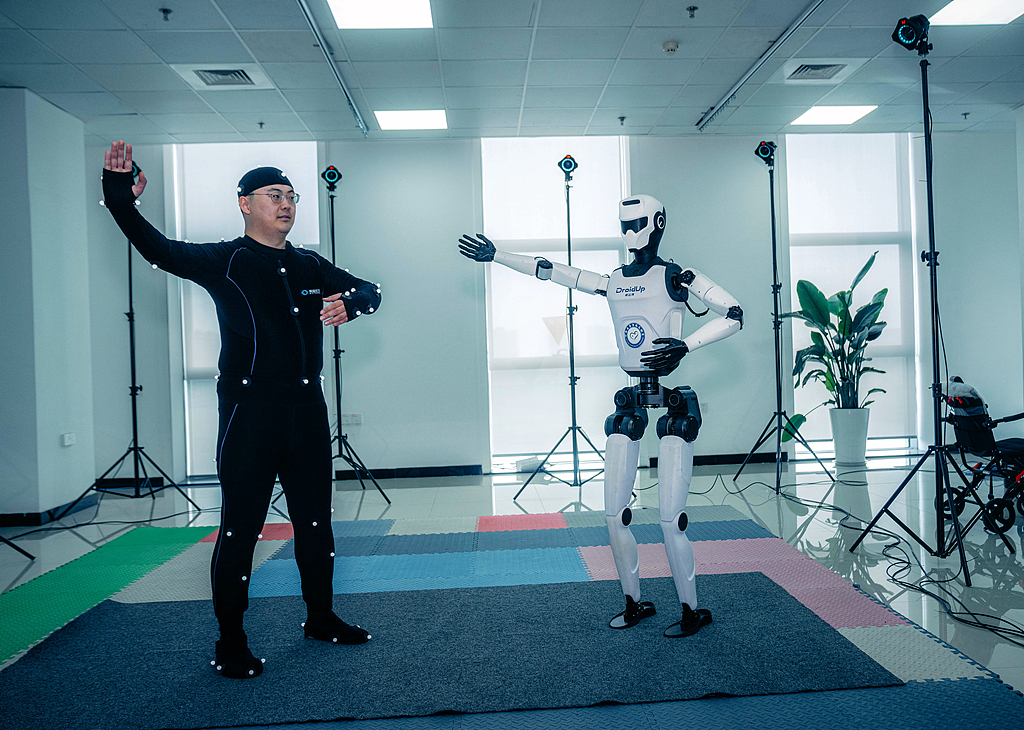
A motion capture engineer records movements to improve robot precision and control at an embodied intelligence laboratory in China, March 15, 2026. /VCG

A motion capture engineer records movements to improve robot precision and control at an embodied intelligence laboratory in China, March 15, 2026. /VCG

General-purpose AI models are not yet dependable technical coaches. Recent benchmarks of exercise-movement assessment show that even the best multimodal models still struggle to identify precise form errors reliably. They may also mistake a harmless individual variation for a defect. Consequently, the future is unlikely to be a single chatbot dispensing universal instructions. It is more likely to be a system combining validated measurement, sport-specific models, longitudinal athlete records and transparent recommendations, with qualified humans responsible for consequential decisions.

The goal should be a genuine training loop: sensing, analysis, decision, execution and validation. After one session, the system would integrate movement quality, mechanical load, physiological responses and the athlete's own perceptions; propose a specific adjustment; then test whether the next session produces the intended effect. Over time, it could learn what works for that particular athlete, rather than merely comparing them with group averages. Coaches would remain essential for setting priorities, managing uncertainty, understanding motivation, and deciding when not to follow the data.

Hawk-Eye took nearly a quarter-century to become an accepted part of officiating. AI coaching assistants may spread much faster, but the essential test will be harder than calling a ball in or out. Their success will be measured not by how many variables they calculate or how fluent their explanations sound, but by whether athletes consistently train better—and whether coaches have good reason to trust them.


Original Text (This is the original text for your reference.)

Editor's note: Artificial intelligence is giving coaches new ways to analyze athletic performance, but turning data into better training remains a challenge. Liu Haoyang, a professor at Beijing Sport University and co-founder and CEO of motion capture company Noitom, examines how these tools are being used and what it will take to make them reliable coaching aids. The article reflects the author's opinions and not necessarily the views of CGTN.

Cameras and equipment used for Hawk-Eye electronic line calling at the Terra Wortmann Open in Halle, Germany, June 16, 2026. /VCG

Cameras and equipment used for Hawk-Eye electronic line calling at the Terra Wortmann Open in Halle, Germany, June 16, 2026. /VCG

On October 11, Zheng Qinwen defeated Mirra Andreeva to win the 2026 China Open, becoming the first Chinese player to claim the women's singles title. Spectators may barely have noticed an absence: no line judges calling balls in or out. Every call came from an electronic system, instantly, without a raised arm. Hawk-Eye appeared in cricket television coverage in 2001 and reached tennis in 2006 as a way to review disputed calls. In 2017, the Next Gen ATP Finals tested live electronic line calling without line judges. The Australian Open and US Open followed in 2021; Wimbledon and the ATP Tour completed the switch in 2025. From broadcast visualization to officiating authority took nearly a quarter-century.

One Grand Slam remains an exception. At Roland-Garros on May 31, a crucial shot in Casper Ruud's match against João Fonseca was ruled in after an inspection of its clay mark, although television tracking suggested it was out. French Open director Amélie Mauresmo defended retaining human line judges, arguing that changing clay surfaces raise questions about electronic accuracy. The dispute shows that technical capability does not automatically produce trust. For AI in coaching, the challenge goes further: How can it help coaches turn measurement data into decisions that improve athletes’ performance?

What technology can measure

Meanwhile, technologies for analyzing athletic performance are advancing rapidly. At the Milano Cortina Winter Olympics earlier this year, 14 cameras recording in 8K circled the figure-skating rink supported AI-driven 3D tracking, producing near-real-time measurements of jump height, airtime and blade angle. Related technology was used at the 2022 Beijing games. Meanwhile, the International Skating Union has been testing computer-vision tools to help technical panels assess jump rotations and take-off edges. These applications do not yet show better training, but they do show measurement moving beyond the laboratory.

Some single-purpose technologies are already established in elite sport. Australian company Catapult reports that its systems serve more than 5,000 teams across over 40 sports, tracking running distance, velocity and acceleration loads. In China, Baidu worked with the national diving team on rapid video replay and AI-assisted technical analysis of movements that unfold between take-off and water entry in less than two seconds. Motion analysis was also widely used by China's figure-skating support teams in preparation for the Beijing Winter Olympics. Such tools reveal details difficult to observe by eye and help compare performance across sessions.

A reporter tries an AI-powered tennis app that records and assesses players' strokes and offers tips for improvement, September 20, 2026. /VCG

A reporter tries an AI-powered tennis app that records and assesses players' strokes and offers tips for improvement, September 20, 2026. /VCG

Why measurement is not enough

But measurable does not necessarily mean trainable. Devices can be expensive, complicated to use and difficult to integrate; data on how hard athletes train, how they move and how their bodies respond are often stored in separate systems. Turning those numbers into useful guidance still requires sports scientists and experienced coaches. Even the measurements need scrutiny. A recent analysis of camera-based motion capture during jumping found that estimated joint angles could be off by about 4-5 degrees, and sometimes more. To a coach, this raises a practical question: If an athlete's knee angle appears to change by five degrees, is it a real improvement or just measurement error? In elite sport, such uncertainty can obscure a technically meaningful change. There is no universal ideal technique: anatomy, injury history and competitive demands all matter.

There is a deeper scientific challenge. Discovering that a variable correlates with performance does not establish that changing it will improve performance. Injury prediction offers a cautionary example. A review in the British Journal of Sports Medicine found that some machine-learning models appeared highly accurate but gave warnings too broad or too far in advance to guide a coach's next training session. A truly reliable AI model that can predict an individual athlete's injury risk remains more an ambition than a reality.

From analysis to coaching decisions

Artificial intelligence is beginning to cross that boundary between description and recommendation. In 2024, Google DeepMind and Liverpool FC published TacticAI, which predicts aspects of corner kicks and proposes alternative player positions. In a blinded expert assessment, its suggestions were preferred to existing tactical setups 90 percent of the time. That demonstrates the plausibility of AI-generated options, not proof of more goals or victories—at the time of publication, no Liverpool player had yet tried them on the pitch. China is pursuing related approaches. Researchers at the Chinese Academy of Sciences' Institute of Automation, working with teams at Beijing Sport University, have explored football simulation, tactical situation analysis and models of how alternative decisions might change the development of play. These studies shift attention from "what happened?" toward "what else could happen?"

The 2026 FIFA World Cup offered another glimpse of the next stage. FIFA AI Pro, developed with Lenovo, brought official event and tracking data together with match video in a conversational assistant. FIFA reports that all 48 participating teams used it. A coach or analyst could ask a question rather than navigate several specialist dashboards. This could benefit teams with limited specialist staff, provided the answers are verifiable.

A motion capture engineer records movements to improve robot precision and control at an embodied intelligence laboratory in China, March 15, 2026. /VCG

A motion capture engineer records movements to improve robot precision and control at an embodied intelligence laboratory in China, March 15, 2026. /VCG

General-purpose AI models are not yet dependable technical coaches. Recent benchmarks of exercise-movement assessment show that even the best multimodal models still struggle to identify precise form errors reliably. They may also mistake a harmless individual variation for a defect. Consequently, the future is unlikely to be a single chatbot dispensing universal instructions. It is more likely to be a system combining validated measurement, sport-specific models, longitudinal athlete records and transparent recommendations, with qualified humans responsible for consequential decisions.

The goal should be a genuine training loop: sensing, analysis, decision, execution and validation. After one session, the system would integrate movement quality, mechanical load, physiological responses and the athlete's own perceptions; propose a specific adjustment; then test whether the next session produces the intended effect. Over time, it could learn what works for that particular athlete, rather than merely comparing them with group averages. Coaches would remain essential for setting priorities, managing uncertainty, understanding motivation, and deciding when not to follow the data.

Hawk-Eye took nearly a quarter-century to become an accepted part of officiating. AI coaching assistants may spread much faster, but the essential test will be harder than calling a ball in or out. Their success will be measured not by how many variables they calculate or how fluent their explanations sound, but by whether athletes consistently train better—and whether coaches have good reason to trust them.

Comments

    Something to say?

    Login or Sign up for free

    Disclaimer: The translated content is provided by third-party translation service providers, and IKCEST shall not assume any responsibility for the accuracy and legality of the content.
    Translate engine
    Article's language
    English
    中文
    Pусск
    Français
    Español
    العربية
    Português
    Kikongo
    Dutch
    kiswahili
    هَوُسَ
    IsiZulu
    Action
    Related

    Report

    Select your report category *


    Reason *


    By pressing send, your feedback will be used to improve IKCEST. Your privacy will be protected.

    Submit
    Cancel