

Welcome to the IKCEST
China's APEC opportunities: AI-native grid, green‑energy transition
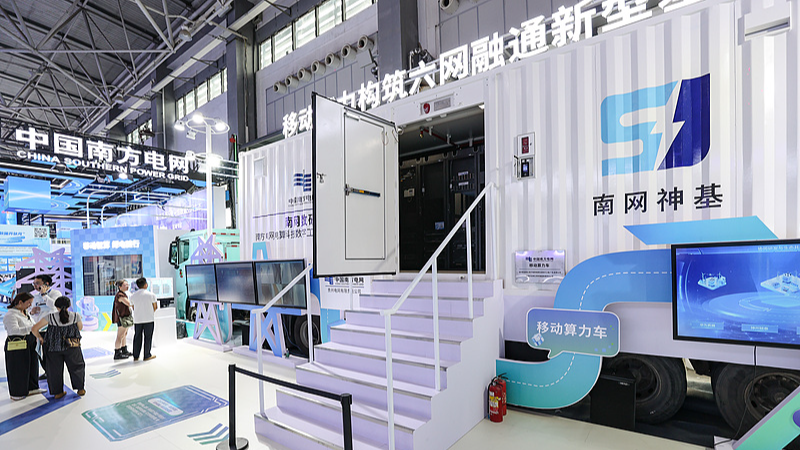
A mobile computing‑power vehicle draws visitors at China Southern Power Grid's booth during the 2026 China International Big Data Industry Expo in Guiyang, southwest China's Guizhou Province, August 27, 2026. /VCG

A mobile computing‑power vehicle draws visitors at China Southern Power Grid's booth during the 2026 China International Big Data Industry Expo in Guiyang, southwest China's Guizhou Province, August 27, 2026. /VCG

Editor's note: The APEC Economic Leaders' Meeting will be held in Shenzhen this month. Liang Lingyu, Strategic‑level Expert at China Southern Power Grid and Director of Computing‑Power‑Grid Engineering Company of CSG Digital Research Institute, shares industry insights on the shift toward an AI‑native power grid . He discusses how to align computing workloads with electricity supply and proposes practical APEC cooperation options for green energy and AI integration.

Faced with global climate challenges and surging power demand driven by the artificial‑intelligence boom, accelerating green‑energy transition has become an urgent priority to build a power system that is safe, reliable, adequately supplied, resilient, inclusive, sustainable and affordable. 

Advancing coordinated development of the six key infrastructure networks – water, electricity, computing, communications, urban underground utilities, and logistics – through new‑grid development serves as a major driving force toward this goal. 

Better planning alignment matches energy demand with clean‑energy supply across geographies. 

Joint‑facility construction and resource‑sharing cut redundant investment, lower energy consumption and reduce costs. 

Through unified coordination, flexibly‑scheduled power‑intensive activities such as computing workloads can be prioritized at times and locations with abundant green power. 

This builds a solid green‑energy foundation for more effective climate action, improves the stability, resilience and affordability of energy systems, and better underpins global AI development.

A critical pathway to deliver this vision lies in the AI‑native paradigm, which merges the precision, real‑time responsiveness and trustworthiness of energy‑sector operations to integrate general‑purpose and domain‑specific models. 

By deeply embedding artificial intelligence into production workflows and organizational models of the power sector, the AI‑native paradigm provides essential energy‑infrastructure backing for industrial‑AI advancement. 

Meanwhile, by meeting strict requirements for intelligent perception, dependable decision‑making and secure operation in power systems, it identifies generic methodologies for intelligent transformation of complex industrial systems and offers technological guidance for broader industrial‑AI upgrading.

Why the AI‑native paradigm matters

Against shared pressures from global climate change and the AI revolution, energy constitutes a key battlefield and power systems act as a primary workhorse. 

Exploring the AI‑native paradigm and realizing two‑way empowerment between power infrastructure and power‑sector native AI represents a vital pathway toward energy‑system upgrading, green transition, coordinated infrastructure development and industrial‑AI transformation.

Power systems possess unique strengths in terms of public‑service mandate, strategic importance and system complexity. 

Delivering technical breakthroughs of the AI‑native energy architecture within industrial scenarios can realize dual dividends: robust energy‑infrastructure support and innovation‑driven leadership, which in turn accelerate overall industrial‑AI progress and digital‑intelligent upgrading across real‑economy industries.

First, as foundational infrastructure linking energy production, industrial operations, urban governance and social livelihoods, advances in the AI‑native paradigm will upgrade energy systems and deliver more stable, reliable and affordable power supplies to underpin large‑scale deployment of industrial‑AI applications.

Furthermore, power systems serve as a representative test‑bed for exploring industry‑native AI. 

Power supply requires real‑time supply‑demand balance; generation, transmission and consumption are tightly interconnected, and all operations must satisfy stringent safety rules. 

As growing volumes of variable‑renewable‑energy generation from wind and solar feed into grids, closer coordination is needed among power‑generation, end‑use and energy‑storage assets, raising operational and coordination complexity. 

AI must interpret physical laws governing power‑system behavior, detect evolving conditions and make robust decisions under complex constraints to guarantee operational safety. 

These challenges are widely shared across other industrial sectors. 

For this reason, technical advances and practical experience from the AI‑native paradigm can deliver valuable reference for other industries and catalyses broader industrial‑AI development.

China's practice 

Confronted with global climate change and heavy power loads brought by artificial‑intelligence expansion, China is advancing new‑grid development to boost coordination across the six key infrastructure networks, advance green‑energy transition and build a stable, clean, sufficient and affordable energy foundation for AI growth. 

The AI‑native paradigm provides core technical support for this undertaking.

To satisfy requirements for coordinated national critical‑infrastructure development featuring "unified dispatching, tiered management and on‑site decision‑making", China has proposed and is implementing an integrated technical framework built on four pillars: AI‑native interaction, AI‑native architecture, AI‑native processes, and AI‑native tool integration.

AI‑native interaction: allows operators to submit requirements and complete tasks using everyday‑language inputs, lowering technical barriers for cross‑network business workflows.

AI‑native architecture: reorganizes industry‑wide digital underpinnings around AI, enabling interoperability among diverse agents, algorithms and models and advancing connectivity across intelligent systems of the six key infrastructure networks.

AI‑native processes: empowers intelligent agents serving the six key infrastructure networks to autonomously generate solutions and collaborate on tasks, supporting integrated planning and sequenced construction of cross‑network infrastructure. 

AI‑native tool integration: unifies access to diverse professional tools, maps equipment, business workflows and inter‑relationships within the six key infrastructure networks, and enables AI to invoke relevant tools on‑demand for joint task delivery.

This technical framework is being put into practice at China Southern Power Grid, enabling coordinated planning, construction, dispatching and operation of related infrastructure.

Through its E‑Hong AI innovation platform, China Southern Power Grid interconnects grid equipment, operational systems and artificial‑intelligence capabilities, merging previously siloed data and tool‑sets for seamless workflows – an illustration of AI‑native architecture.

For grid‑construction planning, operators can submit work requirements in conversational natural‑language to Da‑Wate, eliminating cumbersome manual operations, embodying AI‑native interaction. 

Its companion module Da‑Wate Yun‑Rui then analyses where and how much grid capacity should be built, and automatically generates plans and reports. 

Tasks that once took multiple days can now be finished within 10 minutes, with AI driving end‑to‑end workflows – demonstrating AI‑native processes.

In power dispatching, Tian‑Quan performs high‑speed complex calculations based on generation‑load conditions and grid‑safety constraints. 

It supports power‑market participants in determining traded energy volumes and prices, furnishing appropriate specialized computing resources for AI‑driven professional tasks, representing AI‑native tool integration.

For equipment inspection, artificial‑intelligence models process inspection imagery to identify line hazards and equipment defects, guiding maintenance prioritisation. 

This shifts equipment upkeep from rigid calendar‑based checks toward condition‑driven maintenance, another real‑world instance of AI‑native processes.

These domestic explorations open new avenues for Asia‑Pacific economies to develop clean energy and build smarter infrastructure.

Asia-Pacific green energy integration

China's experience with technical innovation under the AI‑native paradigm and coordinated deployment of the six key infrastructure networks offers fresh cooperative approaches for Asia‑Pacific green‑energy transition and AI‑energy integration. 

Going forward, APEC economies can deepen multi‑level, cross‑border collaboration across several dimensions:

Joint R&D: Co‑develop AI‑enhanced approaches to boost variable renewable energy utilization for wind and solar power. Explore how to align computing workloads with electricity supply to foster more stable, reliable and greener grid operation.

Cross‑border demonstration projects: Launch joint pilots on power‑sector AI and clean‑energy solutions tailored to local energy endowments and practical needs of individual economies. Test coordinated planning, construction and operation of supporting facilities to accelerate translation of research outputs into real‑world deployment.

Standards alignment and knowledge sharing: Encourage participation in international‑standards‑setting. Exchange technical specifications, data‑exchange protocols and usage rules to improve interoperability of equipment and systems across borders, and enable coordinated dispatching of emergency‑response resources.

Infrastructure and industrial cooperation: Promote resource‑sharing and coordinated operation across water‑supply, power, computing, communications, urban‑underground‑utility and logistics infrastructure. Examples include scheduling computing workloads in response to power‑generation profiles, and integrated laying of pipelines and cables during urban‑renovation programmes. Expand cross‑regional and cross‑enterprise collaboration to reduce redundant construction and resource waste, improve variable‑renewable‑energy utilization, and cut energy use and carbon emissions during construction and operation.

Looking ahead, through co‑innovation on technologies, co‑building of use‑case scenarios, harmonized standards and win‑win ecosystem development, APEC economies can accelerate delivery of a green, smart, reliable and inclusive modern energy and infrastructure system. 

This will inject fresh impetus into sustainable development across the Asia‑Pacific region.

Original Text (This is the original text for your reference.)

A mobile computing‑power vehicle draws visitors at China Southern Power Grid's booth during the 2026 China International Big Data Industry Expo in Guiyang, southwest China's Guizhou Province, August 27, 2026. /VCG

A mobile computing‑power vehicle draws visitors at China Southern Power Grid's booth during the 2026 China International Big Data Industry Expo in Guiyang, southwest China's Guizhou Province, August 27, 2026. /VCG

Editor's note: The APEC Economic Leaders' Meeting will be held in Shenzhen this month. Liang Lingyu, Strategic‑level Expert at China Southern Power Grid and Director of Computing‑Power‑Grid Engineering Company of CSG Digital Research Institute, shares industry insights on the shift toward an AI‑native power grid . He discusses how to align computing workloads with electricity supply and proposes practical APEC cooperation options for green energy and AI integration.

Faced with global climate challenges and surging power demand driven by the artificial‑intelligence boom, accelerating green‑energy transition has become an urgent priority to build a power system that is safe, reliable, adequately supplied, resilient, inclusive, sustainable and affordable. 

Advancing coordinated development of the six key infrastructure networks – water, electricity, computing, communications, urban underground utilities, and logistics – through new‑grid development serves as a major driving force toward this goal. 

Better planning alignment matches energy demand with clean‑energy supply across geographies. 

Joint‑facility construction and resource‑sharing cut redundant investment, lower energy consumption and reduce costs. 

Through unified coordination, flexibly‑scheduled power‑intensive activities such as computing workloads can be prioritized at times and locations with abundant green power. 

This builds a solid green‑energy foundation for more effective climate action, improves the stability, resilience and affordability of energy systems, and better underpins global AI development.

A critical pathway to deliver this vision lies in the AI‑native paradigm, which merges the precision, real‑time responsiveness and trustworthiness of energy‑sector operations to integrate general‑purpose and domain‑specific models. 

By deeply embedding artificial intelligence into production workflows and organizational models of the power sector, the AI‑native paradigm provides essential energy‑infrastructure backing for industrial‑AI advancement. 

Meanwhile, by meeting strict requirements for intelligent perception, dependable decision‑making and secure operation in power systems, it identifies generic methodologies for intelligent transformation of complex industrial systems and offers technological guidance for broader industrial‑AI upgrading.

Why the AI‑native paradigm matters

Against shared pressures from global climate change and the AI revolution, energy constitutes a key battlefield and power systems act as a primary workhorse. 

Exploring the AI‑native paradigm and realizing two‑way empowerment between power infrastructure and power‑sector native AI represents a vital pathway toward energy‑system upgrading, green transition, coordinated infrastructure development and industrial‑AI transformation.

Power systems possess unique strengths in terms of public‑service mandate, strategic importance and system complexity. 

Delivering technical breakthroughs of the AI‑native energy architecture within industrial scenarios can realize dual dividends: robust energy‑infrastructure support and innovation‑driven leadership, which in turn accelerate overall industrial‑AI progress and digital‑intelligent upgrading across real‑economy industries.

First, as foundational infrastructure linking energy production, industrial operations, urban governance and social livelihoods, advances in the AI‑native paradigm will upgrade energy systems and deliver more stable, reliable and affordable power supplies to underpin large‑scale deployment of industrial‑AI applications.

Furthermore, power systems serve as a representative test‑bed for exploring industry‑native AI. 

Power supply requires real‑time supply‑demand balance; generation, transmission and consumption are tightly interconnected, and all operations must satisfy stringent safety rules. 

As growing volumes of variable‑renewable‑energy generation from wind and solar feed into grids, closer coordination is needed among power‑generation, end‑use and energy‑storage assets, raising operational and coordination complexity. 

AI must interpret physical laws governing power‑system behavior, detect evolving conditions and make robust decisions under complex constraints to guarantee operational safety. 

These challenges are widely shared across other industrial sectors. 

For this reason, technical advances and practical experience from the AI‑native paradigm can deliver valuable reference for other industries and catalyses broader industrial‑AI development.

China's practice 

Confronted with global climate change and heavy power loads brought by artificial‑intelligence expansion, China is advancing new‑grid development to boost coordination across the six key infrastructure networks, advance green‑energy transition and build a stable, clean, sufficient and affordable energy foundation for AI growth. 

The AI‑native paradigm provides core technical support for this undertaking.

To satisfy requirements for coordinated national critical‑infrastructure development featuring "unified dispatching, tiered management and on‑site decision‑making", China has proposed and is implementing an integrated technical framework built on four pillars: AI‑native interaction, AI‑native architecture, AI‑native processes, and AI‑native tool integration.

AI‑native interaction: allows operators to submit requirements and complete tasks using everyday‑language inputs, lowering technical barriers for cross‑network business workflows.

AI‑native architecture: reorganizes industry‑wide digital underpinnings around AI, enabling interoperability among diverse agents, algorithms and models and advancing connectivity across intelligent systems of the six key infrastructure networks.

AI‑native processes: empowers intelligent agents serving the six key infrastructure networks to autonomously generate solutions and collaborate on tasks, supporting integrated planning and sequenced construction of cross‑network infrastructure. 

AI‑native tool integration: unifies access to diverse professional tools, maps equipment, business workflows and inter‑relationships within the six key infrastructure networks, and enables AI to invoke relevant tools on‑demand for joint task delivery.

This technical framework is being put into practice at China Southern Power Grid, enabling coordinated planning, construction, dispatching and operation of related infrastructure.

Through its E‑Hong AI innovation platform, China Southern Power Grid interconnects grid equipment, operational systems and artificial‑intelligence capabilities, merging previously siloed data and tool‑sets for seamless workflows – an illustration of AI‑native architecture.

For grid‑construction planning, operators can submit work requirements in conversational natural‑language to Da‑Wate, eliminating cumbersome manual operations, embodying AI‑native interaction. 

Its companion module Da‑Wate Yun‑Rui then analyses where and how much grid capacity should be built, and automatically generates plans and reports. 

Tasks that once took multiple days can now be finished within 10 minutes, with AI driving end‑to‑end workflows – demonstrating AI‑native processes.

In power dispatching, Tian‑Quan performs high‑speed complex calculations based on generation‑load conditions and grid‑safety constraints. 

It supports power‑market participants in determining traded energy volumes and prices, furnishing appropriate specialized computing resources for AI‑driven professional tasks, representing AI‑native tool integration.

For equipment inspection, artificial‑intelligence models process inspection imagery to identify line hazards and equipment defects, guiding maintenance prioritisation. 

This shifts equipment upkeep from rigid calendar‑based checks toward condition‑driven maintenance, another real‑world instance of AI‑native processes.

These domestic explorations open new avenues for Asia‑Pacific economies to develop clean energy and build smarter infrastructure.

Asia-Pacific green energy integration

China's experience with technical innovation under the AI‑native paradigm and coordinated deployment of the six key infrastructure networks offers fresh cooperative approaches for Asia‑Pacific green‑energy transition and AI‑energy integration. 

Going forward, APEC economies can deepen multi‑level, cross‑border collaboration across several dimensions:

Joint R&D: Co‑develop AI‑enhanced approaches to boost variable renewable energy utilization for wind and solar power. Explore how to align computing workloads with electricity supply to foster more stable, reliable and greener grid operation.

Cross‑border demonstration projects: Launch joint pilots on power‑sector AI and clean‑energy solutions tailored to local energy endowments and practical needs of individual economies. Test coordinated planning, construction and operation of supporting facilities to accelerate translation of research outputs into real‑world deployment.

Standards alignment and knowledge sharing: Encourage participation in international‑standards‑setting. Exchange technical specifications, data‑exchange protocols and usage rules to improve interoperability of equipment and systems across borders, and enable coordinated dispatching of emergency‑response resources.

Infrastructure and industrial cooperation: Promote resource‑sharing and coordinated operation across water‑supply, power, computing, communications, urban‑underground‑utility and logistics infrastructure. Examples include scheduling computing workloads in response to power‑generation profiles, and integrated laying of pipelines and cables during urban‑renovation programmes. Expand cross‑regional and cross‑enterprise collaboration to reduce redundant construction and resource waste, improve variable‑renewable‑energy utilization, and cut energy use and carbon emissions during construction and operation.

Looking ahead, through co‑innovation on technologies, co‑building of use‑case scenarios, harmonized standards and win‑win ecosystem development, APEC economies can accelerate delivery of a green, smart, reliable and inclusive modern energy and infrastructure system. 

This will inject fresh impetus into sustainable development across the Asia‑Pacific region.

Comments

    Something to say?

    Login or Sign up for free

    Disclaimer: The translated content is provided by third-party translation service providers, and IKCEST shall not assume any responsibility for the accuracy and legality of the content.
    Translate engine
    Article's language
    English
    中文
    Pусск
    Français
    Español
    العربية
    Português
    Kikongo
    Dutch
    kiswahili
    هَوُسَ
    IsiZulu
    Action
    Related

    Report

    Select your report category *


    Reason *


    By pressing send, your feedback will be used to improve IKCEST. Your privacy will be protected.

    Submit
    Cancel