

Welcome to the IKCEST
China's open-source AI push gains momentum at WIC Wuzhen Summit

At the physical workspace of ModelScope, China's largest AI open-source community, a single developer can do the work of a team.
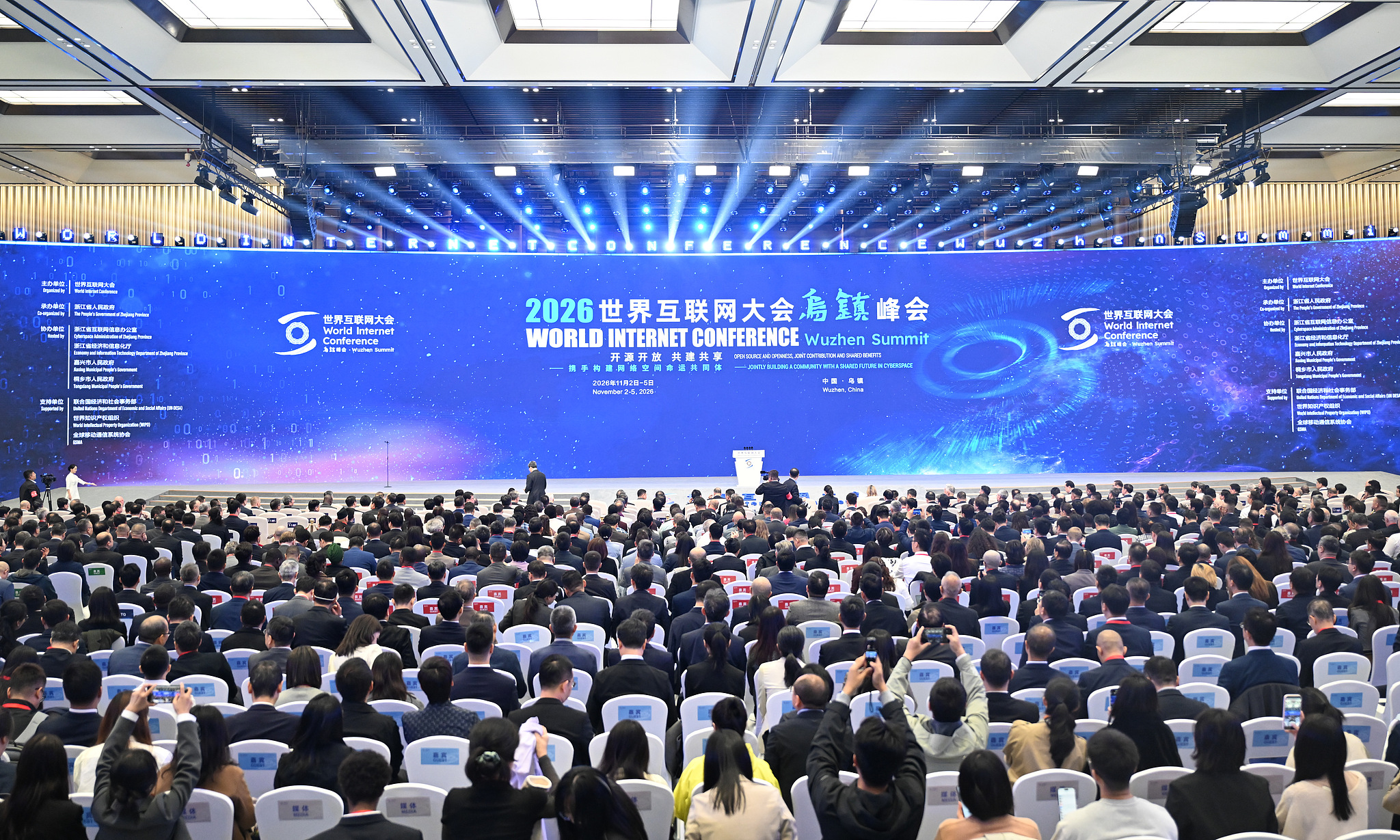
The 2026 World Internet Conference (WIC) Wuzhen Summit opens in Zhejiang Province, east China, November 3, 2026. /VCG

The 2026 World Internet Conference (WIC) Wuzhen Summit opens in Zhejiang Province, east China, November 3, 2026. /VCG

Li Guanghui is among the 249 solo entrepreneurs at this workspace in Hangzhou, the capital city of east China's Zhejiang Province, 95% of whom are working on AI projects. With AI assistance, he built a hotel-booking mini-program entirely on his own, completing in eight months a project that would typically take a team of five to 10 people a year to finish.

Li's experience reflects a broader trend being discussed at the ongoing 2026 World Internet Conference (WIC) Wuzhen Summit in Zhejiang's ancient water town of Wuzhen, highlighting how China's open-source push is gaining momentum.

Open source has become a defining feature of China's AI development. China's national-level AI open-source communities have attracted over 11 million users, while Chinese open-source large models have been downloaded more than 10 billion times globally.

"ModelScope now serves more than 33 million developers from 239 countries and regions," said Joe Tsai, co-founder and chairman of Alibaba Group, which founded and operates ModelScope.

Three years ago, Alibaba launched an open-source AI strategy. To date, its Qwen series has released more than 470 open-source models, featuring over 4 billion cumulative downloads and more than 330,000 derivative models worldwide.

In Uganda, a non-profit organization built a local language model based on Qwen's open-source model, covering 68 African languages and helping more Africans break language barriers. Similar efforts using Chinese open-source AI models are emerging across Africa in sectors like legal services, agriculture, education and insurance.

Notably, Open-source AI is entering public services. China's MAZU intelligent weather early-warning system has been deployed in eight countries, including Pakistan, Ethiopia and Sri Lanka, with cloud trials underway in more than 50 countries as of October 2026.

At the Wuzhen summit's exhibition area, a robot powered by Robbyant's LingBot embodied AI models picks up medicines in a simulated pharmacy. The solution, unveiled in July, is already in use at several pharmacies in Shanghai. The company's LingBot embodied AI models, meanwhile, have been downloaded more than 2.2 million times within nine months, helping lower the entry cost for robotics developers.

Participants at the summit have also called for broader engagement and responsible development. Ya-Qin Zhang, a foreign academician of the Chinese Academy of Engineering, advocated that companies investing in AI should allocate part of their AI budgets to AI governance research and called for the joint development of interoperability standards for AI agents and international safety evaluation platforms to ensure open-source benefits remain controllable and sustainable.


Original Text (This is the original text for your reference.)

At the physical workspace of ModelScope, China's largest AI open-source community, a single developer can do the work of a team.

The 2026 World Internet Conference (WIC) Wuzhen Summit opens in Zhejiang Province, east China, November 3, 2026. /VCG

The 2026 World Internet Conference (WIC) Wuzhen Summit opens in Zhejiang Province, east China, November 3, 2026. /VCG

Li Guanghui is among the 249 solo entrepreneurs at this workspace in Hangzhou, the capital city of east China's Zhejiang Province, 95% of whom are working on AI projects. With AI assistance, he built a hotel-booking mini-program entirely on his own, completing in eight months a project that would typically take a team of five to 10 people a year to finish.

Li's experience reflects a broader trend being discussed at the ongoing 2026 World Internet Conference (WIC) Wuzhen Summit in Zhejiang's ancient water town of Wuzhen, highlighting how China's open-source push is gaining momentum.

Open source has become a defining feature of China's AI development. China's national-level AI open-source communities have attracted over 11 million users, while Chinese open-source large models have been downloaded more than 10 billion times globally.

"ModelScope now serves more than 33 million developers from 239 countries and regions," said Joe Tsai, co-founder and chairman of Alibaba Group, which founded and operates ModelScope.

Three years ago, Alibaba launched an open-source AI strategy. To date, its Qwen series has released more than 470 open-source models, featuring over 4 billion cumulative downloads and more than 330,000 derivative models worldwide.

In Uganda, a non-profit organization built a local language model based on Qwen's open-source model, covering 68 African languages and helping more Africans break language barriers. Similar efforts using Chinese open-source AI models are emerging across Africa in sectors like legal services, agriculture, education and insurance.

Notably, Open-source AI is entering public services. China's MAZU intelligent weather early-warning system has been deployed in eight countries, including Pakistan, Ethiopia and Sri Lanka, with cloud trials underway in more than 50 countries as of October 2026.

At the Wuzhen summit's exhibition area, a robot powered by Robbyant's LingBot embodied AI models picks up medicines in a simulated pharmacy. The solution, unveiled in July, is already in use at several pharmacies in Shanghai. The company's LingBot embodied AI models, meanwhile, have been downloaded more than 2.2 million times within nine months, helping lower the entry cost for robotics developers.

Participants at the summit have also called for broader engagement and responsible development. Ya-Qin Zhang, a foreign academician of the Chinese Academy of Engineering, advocated that companies investing in AI should allocate part of their AI budgets to AI governance research and called for the joint development of interoperability standards for AI agents and international safety evaluation platforms to ensure open-source benefits remain controllable and sustainable.

Comments

    Something to say?

    Login or Sign up for free

    Disclaimer: The translated content is provided by third-party translation service providers, and IKCEST shall not assume any responsibility for the accuracy and legality of the content.
    Translate engine
    Article's language
    English
    中文
    Pусск
    Français
    Español
    العربية
    Português
    Kikongo
    Dutch
    kiswahili
    هَوُسَ
    IsiZulu
    Action
    Related

    Report

    Select your report category *


    Reason *


    By pressing send, your feedback will be used to improve IKCEST. Your privacy will be protected.

    Submit
    Cancel