

Welcome to the IKCEST
Global housing forum opens in China with focus on affordable housing

The world has a housing problem and it shows up mostly in the cities, where nearly half of humanity is crammed. 

According to the UN-Habitat's World Cities Report 2026, up to 3.4 billion people lack access to secure, safe, and adequate housing.  More than 1 billion of those live in "insecure tenure" within informal settlements and slums characterized by overcrowding, environmental risks and limited access to basic services.

These conditions undermine human potential. They damage public health, block access to public services and trap individuals in cycles of economic vulnerability. The urban poor also bear the brunt of environmental hazards. 

With cities now housing about 3.7 billion people in a pressure cooker of housing affordability, aging infrastructure, climate-related risks and social inequality, housing has shifted from a localized issue to a global imperative. 

Shining a spotlight on the crisis, the 2026 Global Observance of World Cities Day opened in Fuzhou, east China's Fujian Province, under the theme "Regenerating the City: Adequate Housing for All." It's bringing global attention to the urgent need for safe, affordable housing.

China's answer
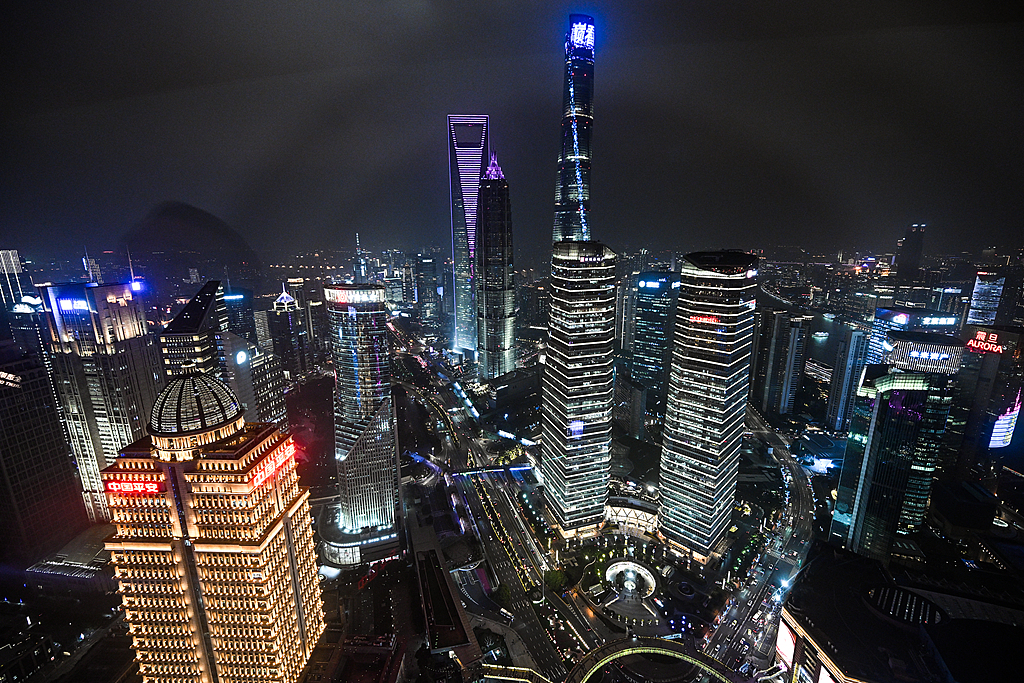
An aerial view of the city of Shanghai, China, March 6, 2026. /VCG

An aerial view of the city of Shanghai, China, March 6, 2026. /VCG

China is tackling this head-on through massive urban renewal.

By the end of 2025, China's urbanization rate hit 67.89%, with over 950 million people living in cities, according to the National Bureau of Statistics. The focus has shifted from just building more – it's now about building better.

During the 14th Five-Year Plan period (2021–2025), the Ministry of Housing and Urban-Rural Development says more than 240,000 old residential communities were renovated, changing the lives of 110 million people. 

That means 129,000 new elevators, 3.4 million parking spaces and 64,000 community facilities like elderly care and childcare centers. Underground, around 840,000 kilometers of water, gas and heating pipelines were upgraded or replaced – a distance equal to about 21 times the Earth's circumference. On the surface, over 18,000 "pocket parks" and 25,000 kilometers of urban greenways have sprouted up.

They've also made 56,000 residential communities more age-friendly and accessible, adding over 28 million square meters of recreational and sports facilities.
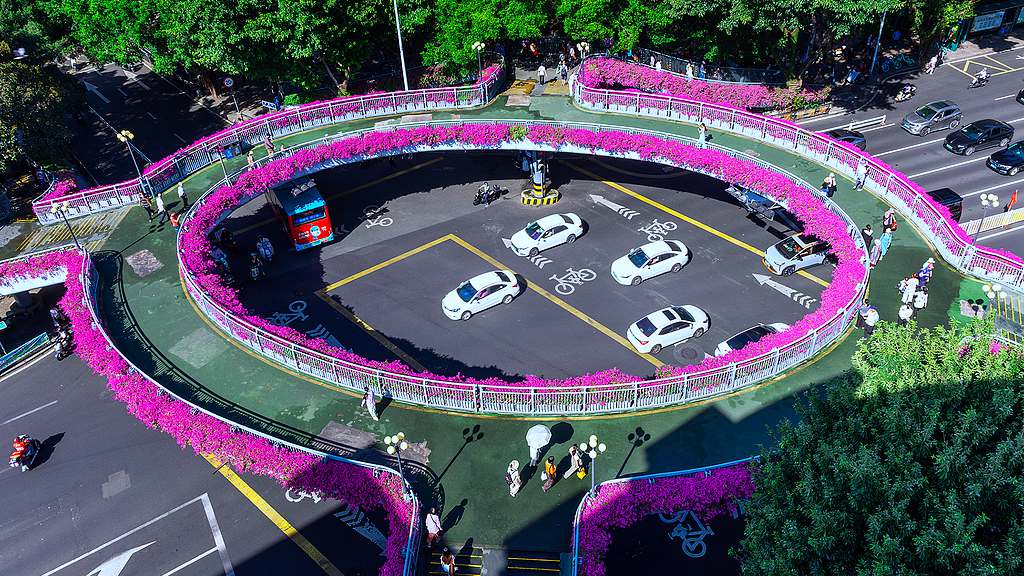
The Ximendou Pedestrian Overpass adorned with lavishly blooming bougainvillea, Fuzhou, east China's Fujian Province, , October 29, 2026

The Ximendou Pedestrian Overpass adorned with lavishly blooming bougainvillea, Fuzhou, east China's Fujian Province, , October 29, 2026

As the host city for this year's event, Fuzhou is putting this philosophy into practice.

With over 2,200 years of history, Fuzhou is known for its stunning landscape, where mountains, rivers and neighborhoods coexist. Its forest coverage rate reached 55% in 2026, with more than 1,800 kilometers of greenways connecting over 1,500 parks.

Fuzhou has also stepped up efforts to improve housing conditions. It has renovated 1,264 old residential communities, launched 116 redevelopment projects in older areas and built 103,000 units of affordable housing.

The city is also building climate resilience. It has constructed or renovated 1,835 kilometers of water, sewage and gas pipelines, and installed 6,756 smart sensors across its utility network, as well as on bridges and in tunnels.

A platform for global urban dialogue
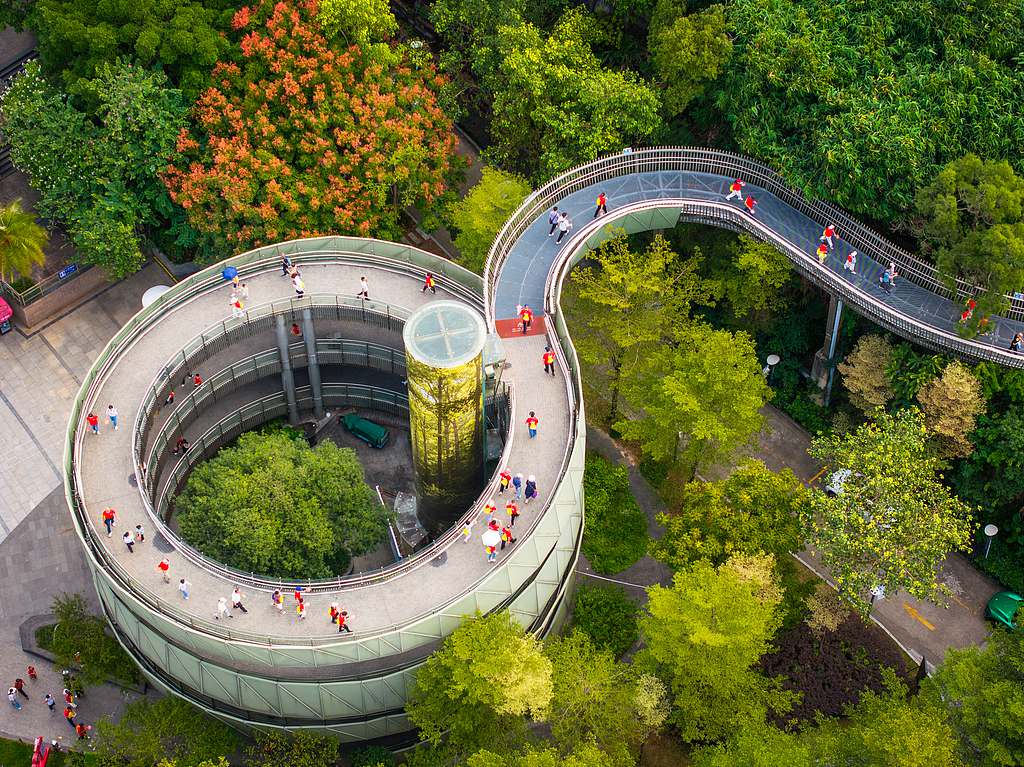
Autumn view of an elevated steel forest walkway at Jinniushan, Fuzhou, east China's Fujian Province, October 25, 2026. /VCG

Autumn view of an elevated steel forest walkway at Jinniushan, Fuzhou, east China's Fujian Province, October 25, 2026. /VCG

China and UN-Habitat jointly established the Global Award for Sustainable Development in Cities (Shanghai Award) in 2022, and Fuzhou received the inaugural award in 2023. 

Rafael Tuts, director of the Global Solutions Division of UN-Habitat, noted that China has accumulated extensive experience in urban renewal, community upgrading and improving urban living conditions, adding that Fuzhou offers an important platform for global dialogue this year.


Original Text (This is the original text for your reference.)

The world has a housing problem and it shows up mostly in the cities, where nearly half of humanity is crammed. 

According to the UN-Habitat's World Cities Report 2026, up to 3.4 billion people lack access to secure, safe, and adequate housing.  More than 1 billion of those live in "insecure tenure" within informal settlements and slums characterized by overcrowding, environmental risks and limited access to basic services.

These conditions undermine human potential. They damage public health, block access to public services and trap individuals in cycles of economic vulnerability. The urban poor also bear the brunt of environmental hazards. 

With cities now housing about 3.7 billion people in a pressure cooker of housing affordability, aging infrastructure, climate-related risks and social inequality, housing has shifted from a localized issue to a global imperative. 

Shining a spotlight on the crisis, the 2026 Global Observance of World Cities Day opened in Fuzhou, east China's Fujian Province, under the theme "Regenerating the City: Adequate Housing for All." It's bringing global attention to the urgent need for safe, affordable housing.

China's answer

An aerial view of the city of Shanghai, China, March 6, 2026. /VCG

An aerial view of the city of Shanghai, China, March 6, 2026. /VCG

China is tackling this head-on through massive urban renewal.

By the end of 2025, China's urbanization rate hit 67.89%, with over 950 million people living in cities, according to the National Bureau of Statistics. The focus has shifted from just building more – it's now about building better.

During the 14th Five-Year Plan period (2021–2025), the Ministry of Housing and Urban-Rural Development says more than 240,000 old residential communities were renovated, changing the lives of 110 million people. 

That means 129,000 new elevators, 3.4 million parking spaces and 64,000 community facilities like elderly care and childcare centers. Underground, around 840,000 kilometers of water, gas and heating pipelines were upgraded or replaced – a distance equal to about 21 times the Earth's circumference. On the surface, over 18,000 "pocket parks" and 25,000 kilometers of urban greenways have sprouted up.

They've also made 56,000 residential communities more age-friendly and accessible, adding over 28 million square meters of recreational and sports facilities.

The Ximendou Pedestrian Overpass adorned with lavishly blooming bougainvillea, Fuzhou, east China's Fujian Province, , October 29, 2026

The Ximendou Pedestrian Overpass adorned with lavishly blooming bougainvillea, Fuzhou, east China's Fujian Province, , October 29, 2026

As the host city for this year's event, Fuzhou is putting this philosophy into practice.

With over 2,200 years of history, Fuzhou is known for its stunning landscape, where mountains, rivers and neighborhoods coexist. Its forest coverage rate reached 55% in 2026, with more than 1,800 kilometers of greenways connecting over 1,500 parks.

Fuzhou has also stepped up efforts to improve housing conditions. It has renovated 1,264 old residential communities, launched 116 redevelopment projects in older areas and built 103,000 units of affordable housing.

The city is also building climate resilience. It has constructed or renovated 1,835 kilometers of water, sewage and gas pipelines, and installed 6,756 smart sensors across its utility network, as well as on bridges and in tunnels.

A platform for global urban dialogue

Autumn view of an elevated steel forest walkway at Jinniushan, Fuzhou, east China's Fujian Province, October 25, 2026. /VCG

Autumn view of an elevated steel forest walkway at Jinniushan, Fuzhou, east China's Fujian Province, October 25, 2026. /VCG

China and UN-Habitat jointly established the Global Award for Sustainable Development in Cities (Shanghai Award) in 2022, and Fuzhou received the inaugural award in 2023. 

Rafael Tuts, director of the Global Solutions Division of UN-Habitat, noted that China has accumulated extensive experience in urban renewal, community upgrading and improving urban living conditions, adding that Fuzhou offers an important platform for global dialogue this year.

Comments

    Something to say?

    Login or Sign up for free

    Disclaimer: The translated content is provided by third-party translation service providers, and IKCEST shall not assume any responsibility for the accuracy and legality of the content.
    Translate engine
    Article's language
    English
    中文
    Pусск
    Français
    Español
    العربية
    Português
    Kikongo
    Dutch
    kiswahili
    هَوُسَ
    IsiZulu
    Action
    Related

    Report

    Select your report category *


    Reason *


    By pressing send, your feedback will be used to improve IKCEST. Your privacy will be protected.

    Submit
    Cancel