

Welcome to the IKCEST
China unveils first Fengyun satellite AI models for extreme weather
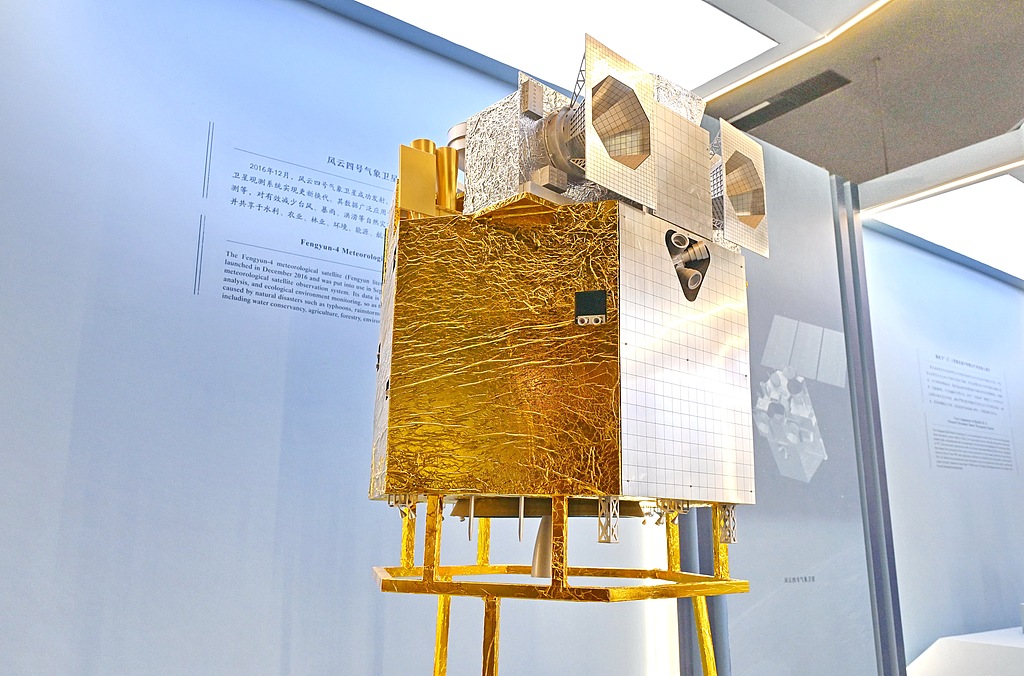
A model of the Fengyun-4 meteorological satellite at an exhibition, the National Museum of China in Beijing, November 28, 2025. /VCG

A model of the Fengyun-4 meteorological satellite at an exhibition, the National Museum of China in Beijing, November 28, 2025. /VCG

China released its first batch of Fengyun meteorological satellite extreme weather artificial intelligence (AI) models on Thursday at a users' conference in Changsha, Hunan Province, central China.

The models, including an intelligent typhoon cloud imagery interpretation model and a severe convection nowcasting warning model, will effectively enhance the capability of Fengyun meteorological satellites in monitoring and warning against extreme weather like typhoons and severe convection, according to the China Meteorological Administration (CMA).

Nowcasting is a method used in meteorology for very short-range weather forecasts.

The intelligent typhoon cloud imagery interpretation model can automatically analyze the position, structure, intensity and evolution of typhoons while simultaneously generating standardized interpretation text and outputting visualized products as a means of providing technical support for typhoon monitoring and forecasting.

At present, this model covers seven types of typhoon features, performs interpretation once every 15 minutes and generates interpretation text within 27 seconds.

The severe convection nowcasting warning model uses continuous observations from the Fengyun-4 meteorological satellite over the past two hours to predict future cloud imagery evolution and identify potential severe convection areas, advancing the warning lead time to four hours.

Fengyun meteorological satellites are an important component of China's comprehensive meteorological observation system. With the rapid development of AI technology, quickly extracting key information from massive satellite data and further predicting weather evolution has become an important direction for their application.

To date, China has 10 Fengyun meteorological satellites in orbit, and their data is open to 141 countries and regions, according to the CMA.


Source(s): Xinhua News Agency

Original Text (This is the original text for your reference.)

A model of the Fengyun-4 meteorological satellite at an exhibition, the National Museum of China in Beijing, November 28, 2025. /VCG

A model of the Fengyun-4 meteorological satellite at an exhibition, the National Museum of China in Beijing, November 28, 2025. /VCG

China released its first batch of Fengyun meteorological satellite extreme weather artificial intelligence (AI) models on Thursday at a users' conference in Changsha, Hunan Province, central China.

The models, including an intelligent typhoon cloud imagery interpretation model and a severe convection nowcasting warning model, will effectively enhance the capability of Fengyun meteorological satellites in monitoring and warning against extreme weather like typhoons and severe convection, according to the China Meteorological Administration (CMA).

Nowcasting is a method used in meteorology for very short-range weather forecasts.

The intelligent typhoon cloud imagery interpretation model can automatically analyze the position, structure, intensity and evolution of typhoons while simultaneously generating standardized interpretation text and outputting visualized products as a means of providing technical support for typhoon monitoring and forecasting.

At present, this model covers seven types of typhoon features, performs interpretation once every 15 minutes and generates interpretation text within 27 seconds.

The severe convection nowcasting warning model uses continuous observations from the Fengyun-4 meteorological satellite over the past two hours to predict future cloud imagery evolution and identify potential severe convection areas, advancing the warning lead time to four hours.

Fengyun meteorological satellites are an important component of China's comprehensive meteorological observation system. With the rapid development of AI technology, quickly extracting key information from massive satellite data and further predicting weather evolution has become an important direction for their application.

To date, China has 10 Fengyun meteorological satellites in orbit, and their data is open to 141 countries and regions, according to the CMA.

Source(s): Xinhua News Agency
Comments

    Something to say?

    Login or Sign up for free

    Disclaimer: The translated content is provided by third-party translation service providers, and IKCEST shall not assume any responsibility for the accuracy and legality of the content.
    Translate engine
    Article's language
    English
    中文
    Pусск
    Français
    Español
    العربية
    Português
    Kikongo
    Dutch
    kiswahili
    هَوُسَ
    IsiZulu
    Action
    Related

    Report

    Select your report category *


    Reason *


    By pressing send, your feedback will be used to improve IKCEST. Your privacy will be protected.

    Submit
    Cancel