

Welcome to the IKCEST
Glaciers retreat and rivers run dry, new water report shows

Rivers around the world in 2025 had one of the driest years in more than three decades, according to a report released Thursday by the World Meteorological Organization (WMO). 

The planet's water reserves used to act as a "savings account" that absorbed the occasional dry season, WMO Secretary-General Celeste Saulo said. "We are depleting it," she told reporters. 
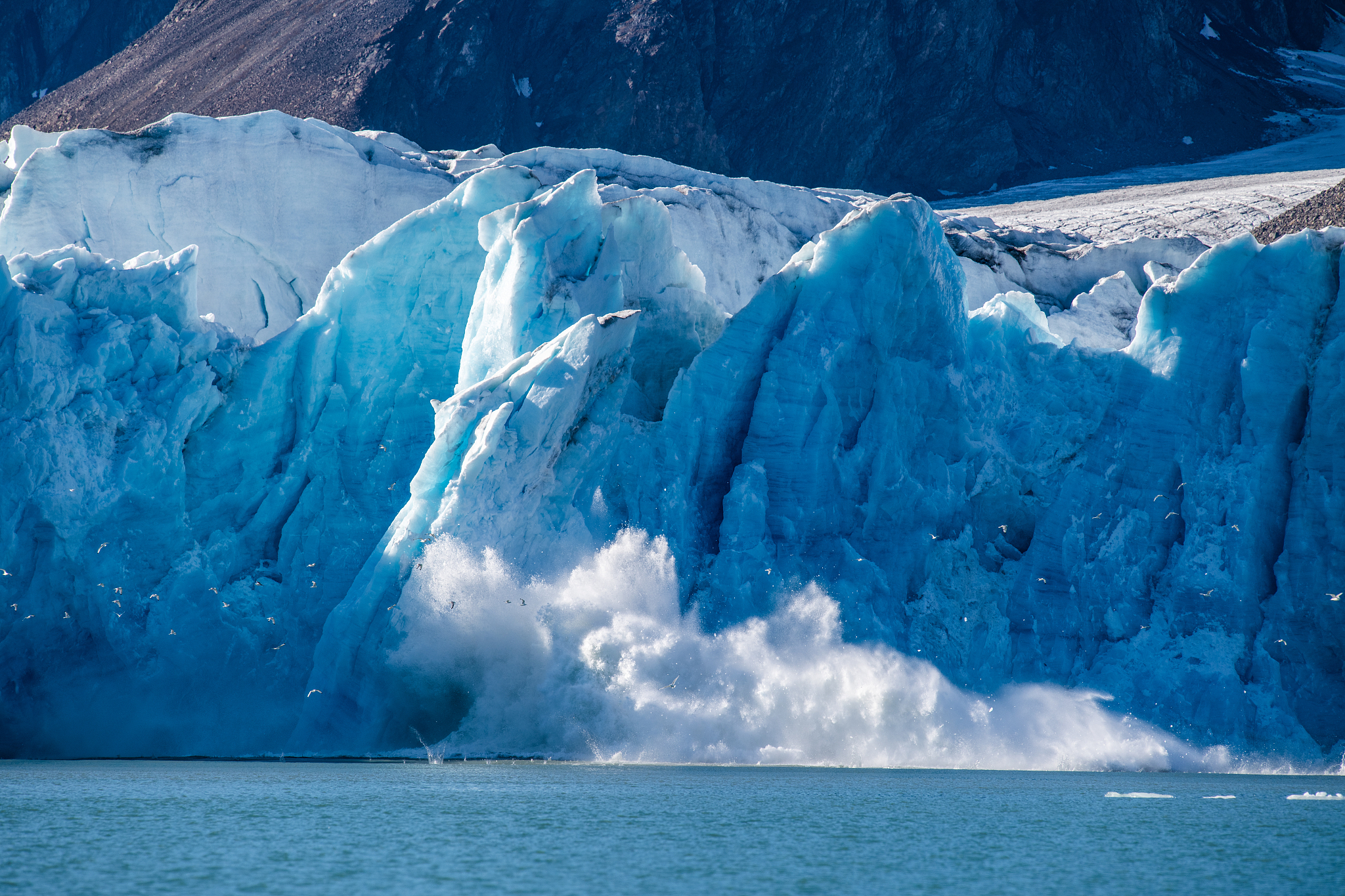
Glaciers in Svalbard Archipelago, Norway, July 29, 2026. /VCG

Glaciers in Svalbard Archipelago, Norway, July 29, 2026. /VCG

Earth's water cycle is increasingly erratic, swinging between too little and too much, the State of Global Water Resources Report shows. The past seven years have seen the fewest rivers with "normal" flows since 1991.

For the seventh year running, basins with "normal" conditions were the exception: between 34% and 38%, against an average of 46% from 1991 to 2020.

Terrestrial water storage – the total held in groundwater, lakes and rivers, soil moisture, vegetation, ice and snow – has been declining since the mid-2010s.

The report warns of continued long-term decline in freshwater storage and glacier retreat, serious consequences for the planet, its people and economies.

2025 was the fourth consecutive year of widespread glacier loss, bringing short-term hazards such as flooding and long-term water insecurity. Between 2023 and 2025, glaciers lost mass every year, with cumulative loss reaching 1,400 gigatons of water – about a third of the world's annual freshwater withdrawals.

All 19 glacier regions lost ice; in Central Asia, Iceland, the Russian Arctic, and western Canada and the United States. "It was among the three worst years on record," said Wayne Jenkinson, the WMO's Director of Hydrology and Cryosphere, at the conference.

In each of the last five years, National Meteorological and Hydrological Services have reported record-breaking floods and droughts. Some places had no recovery time between events, the report noted.

"Water respects no borders," Saulo said. "A river basin's water balance depends on what happens in another country. A glacier's retreat in one country reshapes water availability for populations hundreds of kilometers downstream. This is precisely why we need shared data, shared standards, and shared early warning, the exact function WMO exists to perform."


Source(s): Xinhua News Agency

Original Text (This is the original text for your reference.)

Rivers around the world in 2025 had one of the driest years in more than three decades, according to a report released Thursday by the World Meteorological Organization (WMO). 

The planet's water reserves used to act as a "savings account" that absorbed the occasional dry season, WMO Secretary-General Celeste Saulo said. "We are depleting it," she told reporters. 

Glaciers in Svalbard Archipelago, Norway, July 29, 2026. /VCG

Glaciers in Svalbard Archipelago, Norway, July 29, 2026. /VCG

Earth's water cycle is increasingly erratic, swinging between too little and too much, the State of Global Water Resources Report shows. The past seven years have seen the fewest rivers with "normal" flows since 1991.

For the seventh year running, basins with "normal" conditions were the exception: between 34% and 38%, against an average of 46% from 1991 to 2020.

Terrestrial water storage – the total held in groundwater, lakes and rivers, soil moisture, vegetation, ice and snow – has been declining since the mid-2010s.

The report warns of continued long-term decline in freshwater storage and glacier retreat, serious consequences for the planet, its people and economies.

2025 was the fourth consecutive year of widespread glacier loss, bringing short-term hazards such as flooding and long-term water insecurity. Between 2023 and 2025, glaciers lost mass every year, with cumulative loss reaching 1,400 gigatons of water – about a third of the world's annual freshwater withdrawals.

All 19 glacier regions lost ice; in Central Asia, Iceland, the Russian Arctic, and western Canada and the United States. "It was among the three worst years on record," said Wayne Jenkinson, the WMO's Director of Hydrology and Cryosphere, at the conference.

In each of the last five years, National Meteorological and Hydrological Services have reported record-breaking floods and droughts. Some places had no recovery time between events, the report noted.

"Water respects no borders," Saulo said. "A river basin's water balance depends on what happens in another country. A glacier's retreat in one country reshapes water availability for populations hundreds of kilometers downstream. This is precisely why we need shared data, shared standards, and shared early warning, the exact function WMO exists to perform."

Source(s): Xinhua News Agency
Comments

    Something to say?

    Login or Sign up for free

    Disclaimer: The translated content is provided by third-party translation service providers, and IKCEST shall not assume any responsibility for the accuracy and legality of the content.
    Translate engine
    Article's language
    English
    中文
    Pусск
    Français
    Español
    العربية
    Português
    Kikongo
    Dutch
    kiswahili
    هَوُسَ
    IsiZulu
    Action
    Related

    Report

    Select your report category *


    Reason *


    By pressing send, your feedback will be used to improve IKCEST. Your privacy will be protected.

    Submit
    Cancel