

Welcome to the IKCEST
Investigation: Glacier collapse in Nepal triggered deadly mudslide
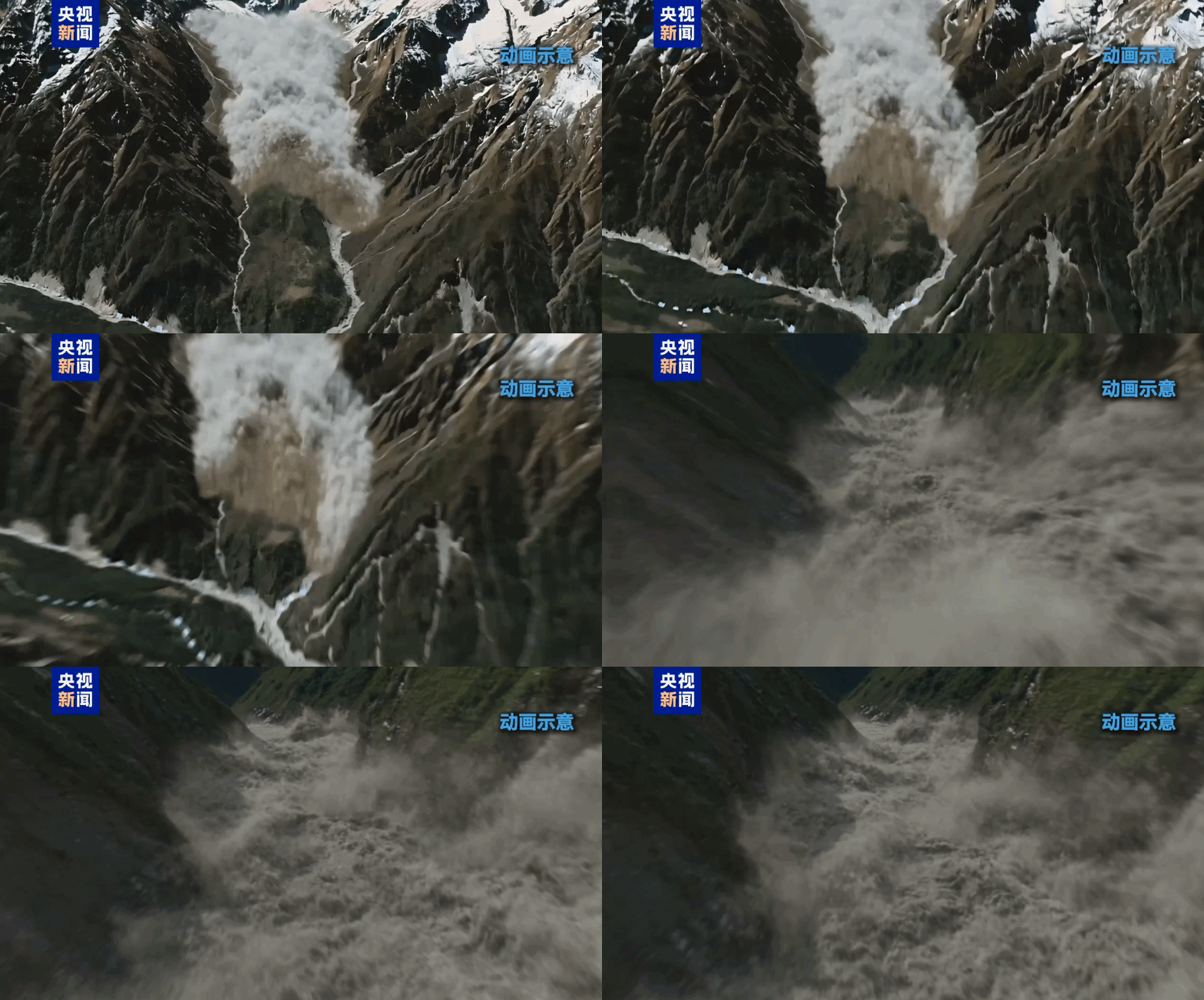
Animation shows the massive mudslide caused by an ice-rock avalanche triggered by a glacier collapse in Nepal. /CMG

Animation shows the massive mudslide caused by an ice-rock avalanche triggered by a glacier collapse in Nepal. /CMG

A glacier in Nepal collapsed at an altitude of about 5,200 meters at around 10:52 a.m. on Wednesday, triggering an ice-rock avalanche that developed into a massive mudslide, Su Pengcheng, a researcher at the Institute of Mountain Hazards and Environment under the Chinese Academy of Sciences, said at a press conference on Sunday.

The finding was made by a team from the institute based on an analysis of remote sensing monitoring data, information transmitted from the disaster site and on-site field investigations.

Following the glacier collapse, the ice-rock avalanche rapidly plunged from an altitude of about 5,200 meters to around 4,000 meters, scouring the mountainside and forming a giant debris flow. After traveling about 22 kilometers at high speed, the flow reached Gyirong Port in southwest China's Xizang Autonomous Region, at an altitude of about 1,800 meters. 

The disaster flattened an area of about 0.7 square kilometers, destroying 27 buildings and related facilities.
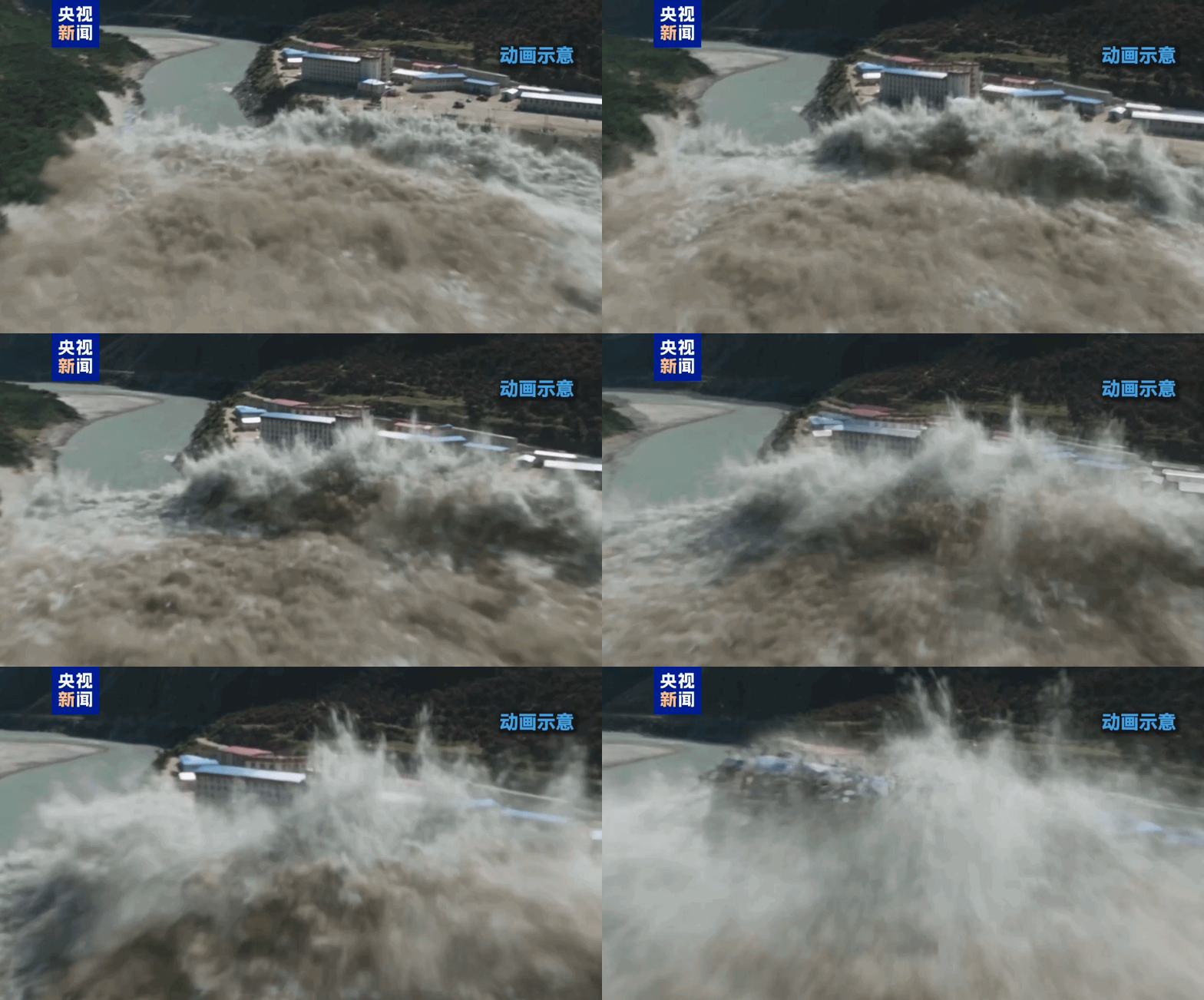
Animation shows the devastating force of the mudslide. /CMG

Animation shows the devastating force of the mudslide. /CMG

The event was a cross-border cascading disaster. After the glacier collapsed, the massive flow entrained and scoured loose deposits along the gully, entered the Guobaxiaqu River, a boundary river between China and Nepal, and then flowed westward into the Donglin Zangbo River. It eventually evolved into a highly destructive debris flow that severely damaged Gyirong Port and the downstream areas.

The mudslide's destructive power was driven by the extreme elevation difference and speed. It dropped nearly 3,300 meters in elevation along the 20-kilometer path and took only seven minutes to reach Gyirong Port after the initial glacier collapse, reaching an average speed of about 50 meters per second. The rapid onset left people with almost no time to react or evacuate, resulting in a disaster of catastrophic scale and severe casualties.


Original Text (This is the original text for your reference.)

Animation shows the massive mudslide caused by an ice-rock avalanche triggered by a glacier collapse in Nepal. /CMG

Animation shows the massive mudslide caused by an ice-rock avalanche triggered by a glacier collapse in Nepal. /CMG

A glacier in Nepal collapsed at an altitude of about 5,200 meters at around 10:52 a.m. on Wednesday, triggering an ice-rock avalanche that developed into a massive mudslide, Su Pengcheng, a researcher at the Institute of Mountain Hazards and Environment under the Chinese Academy of Sciences, said at a press conference on Sunday.

The finding was made by a team from the institute based on an analysis of remote sensing monitoring data, information transmitted from the disaster site and on-site field investigations.

Following the glacier collapse, the ice-rock avalanche rapidly plunged from an altitude of about 5,200 meters to around 4,000 meters, scouring the mountainside and forming a giant debris flow. After traveling about 22 kilometers at high speed, the flow reached Gyirong Port in southwest China's Xizang Autonomous Region, at an altitude of about 1,800 meters. 

The disaster flattened an area of about 0.7 square kilometers, destroying 27 buildings and related facilities.

Animation shows the devastating force of the mudslide. /CMG

Animation shows the devastating force of the mudslide. /CMG

The event was a cross-border cascading disaster. After the glacier collapsed, the massive flow entrained and scoured loose deposits along the gully, entered the Guobaxiaqu River, a boundary river between China and Nepal, and then flowed westward into the Donglin Zangbo River. It eventually evolved into a highly destructive debris flow that severely damaged Gyirong Port and the downstream areas.

The mudslide's destructive power was driven by the extreme elevation difference and speed. It dropped nearly 3,300 meters in elevation along the 20-kilometer path and took only seven minutes to reach Gyirong Port after the initial glacier collapse, reaching an average speed of about 50 meters per second. The rapid onset left people with almost no time to react or evacuate, resulting in a disaster of catastrophic scale and severe casualties.

Comments

    Something to say?

    Login or Sign up for free

    Disclaimer: The translated content is provided by third-party translation service providers, and IKCEST shall not assume any responsibility for the accuracy and legality of the content.
    Translate engine
    Article's language
    English
    中文
    Pусск
    Français
    Español
    العربية
    Português
    Kikongo
    Dutch
    kiswahili
    هَوُسَ
    IsiZulu
    Action
    Related

    Report

    Select your report category *


    Reason *


    By pressing send, your feedback will be used to improve IKCEST. Your privacy will be protected.

    Submit
    Cancel