


Welcome to the IKCEST
More rock glaciers mapped on China's plateau than rest of the world

Chinese researchers have identified more than 130,000 rock glaciers on the Qinghai-Xizang Plateau – more than all previously known rock glaciers in the world combined. 
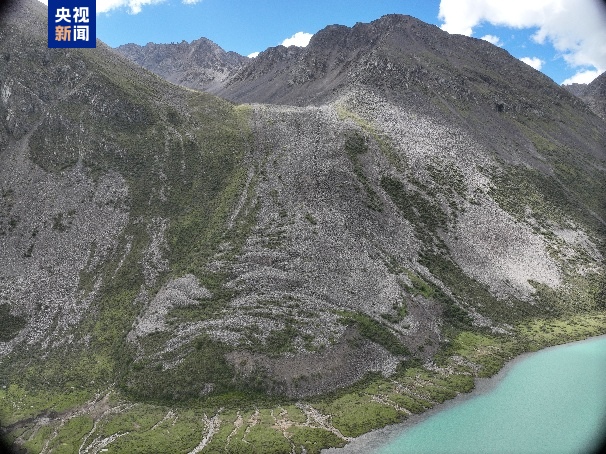
A rock glacier in Nagqu, Xizang Autonomous Region, southwest China. /China Media Group

A rock glacier in Nagqu, Xizang Autonomous Region, southwest China. /China Media Group

Rock glaciers are slow-moving mixtures of ice, rocks and soil. They're hidden under layers of debris, making them hard to spot from satellites or on the ground. 

A team from the Institute of Tibetan Plateau Research under the Chinese Academy of Sciences used high-resolution optical imagery, radar satellite data and AI deep-learning technology to map them and measure how fast they move.

The ice locked inside them holds between 92 and 186 cubic kilometers of water, enough to fill dozens of large reservoirs. The ice in these rock glaciers has been underestimated for a long time. 

"In areas where surrounding glaciers are rapidly retreating or where there are no glaciers at all, the slow release of water from these sources may be far more significant for long-term river replenishment and ecological regulation than we have imagined," said researcher Feng Min. 

Rock glaciers can also cause problems when they shift, blocking rivers or damaging roads and other infrastructure. The new data helps map these hazards.

The dataset also provides a baseline for studying climate change, planning construction and disaster prevention and mitigation in the region.


Original Text (This is the original text for your reference.)

Chinese researchers have identified more than 130,000 rock glaciers on the Qinghai-Xizang Plateau – more than all previously known rock glaciers in the world combined. 

A rock glacier in Nagqu, Xizang Autonomous Region, southwest China. /China Media Group

A rock glacier in Nagqu, Xizang Autonomous Region, southwest China. /China Media Group

Rock glaciers are slow-moving mixtures of ice, rocks and soil. They're hidden under layers of debris, making them hard to spot from satellites or on the ground. 

A team from the Institute of Tibetan Plateau Research under the Chinese Academy of Sciences used high-resolution optical imagery, radar satellite data and AI deep-learning technology to map them and measure how fast they move.

The ice locked inside them holds between 92 and 186 cubic kilometers of water, enough to fill dozens of large reservoirs. The ice in these rock glaciers has been underestimated for a long time. 

"In areas where surrounding glaciers are rapidly retreating or where there are no glaciers at all, the slow release of water from these sources may be far more significant for long-term river replenishment and ecological regulation than we have imagined," said researcher Feng Min. 

Rock glaciers can also cause problems when they shift, blocking rivers or damaging roads and other infrastructure. The new data helps map these hazards.

The dataset also provides a baseline for studying climate change, planning construction and disaster prevention and mitigation in the region.

Comments

    Something to say?

    Login or Sign up for free

    Disclaimer: The translated content is provided by third-party translation service providers, and IKCEST shall not assume any responsibility for the accuracy and legality of the content.
    Translate engine
    Article's language
    English
    中文
    Pусск
    Français
    Español
    العربية
    Português
    Kikongo
    Dutch
    kiswahili
    هَوُسَ
    IsiZulu
    Action
    Related

    Report

    Select your report category *


    Reason *


    By pressing send, your feedback will be used to improve IKCEST. Your privacy will be protected.

    Submit
    Cancel