


Welcome to the IKCEST
Expanding service circle: China's space robot takes on versatile roles

The first intelligent flying robot aboard China's space station, Xiaohang, is becoming an increasingly capable assistant for astronauts, supporting scientific experiments and daily operations in orbit.

Xiaohang made its debut in the space station on January 1, 2025. Since then, it has worked with four crews, conducting multiple rounds of in-orbit verification and continuously improving through data collection and experiments.

By interacting with Xiaohang and human-machine collaborative interaction experimental software, astronauts have carried out research on human-machine spatial relationships, robot behavior representation and multimodal interaction technologies, helping enhance mission efficiency.

The robot can also carry out cabin inspections, monitor equipment and take photos. Through voice commands, astronauts can ask the robot to record key information such as experiment procedures and equipment conditions, making it an important assistant in space.
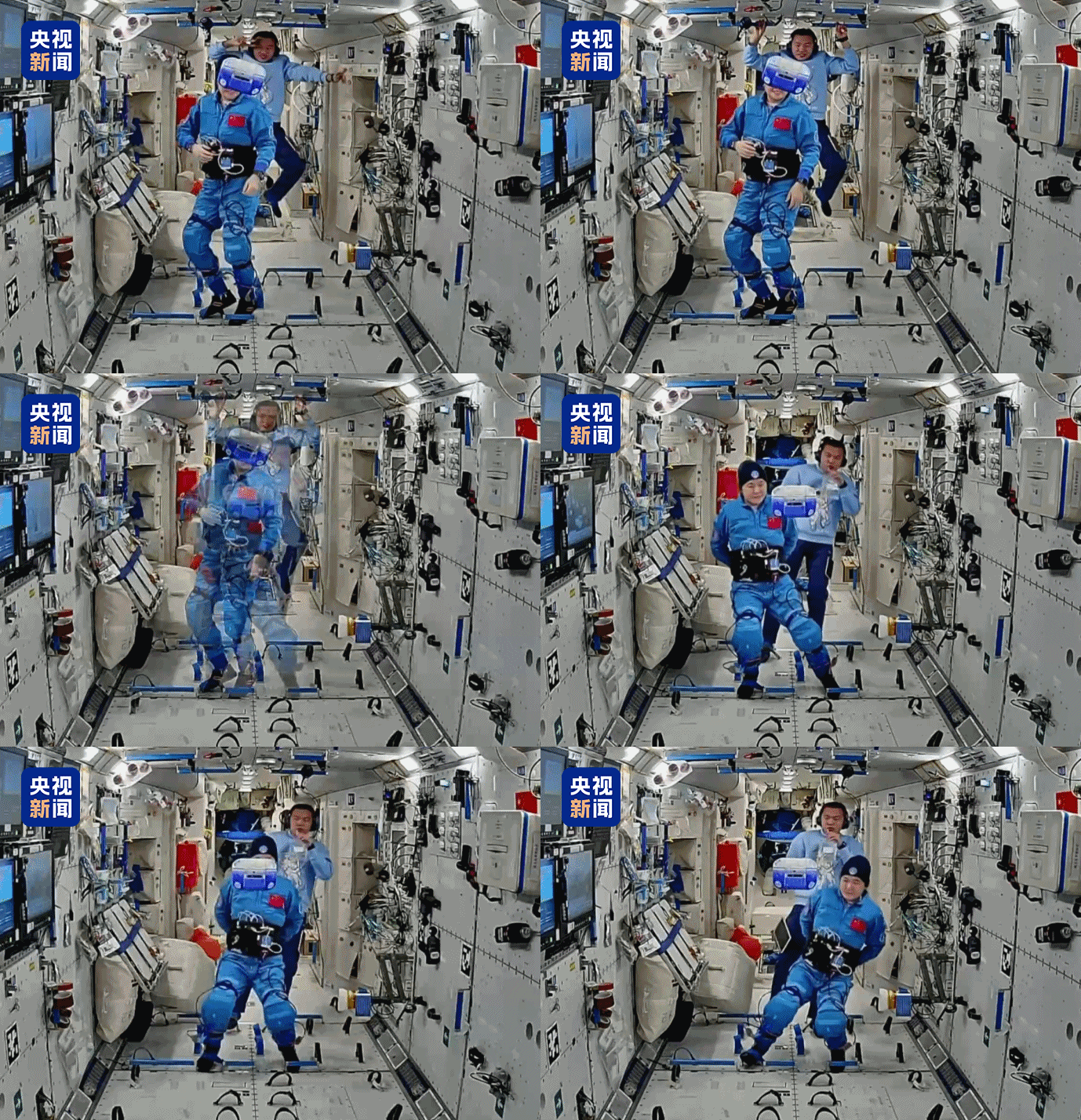
China's Shenzhou-19 crew members interacting with the intelligent robot Xiaohang. /CMG

China's Shenzhou-19 crew members interacting with the intelligent robot Xiaohang. /CMG

In 2025, Xiaohang first partnered with the Shenzhou-19 crew, conducting experiments including multimodal interaction technology research, further enhancing coordination between astronauts and the robot.
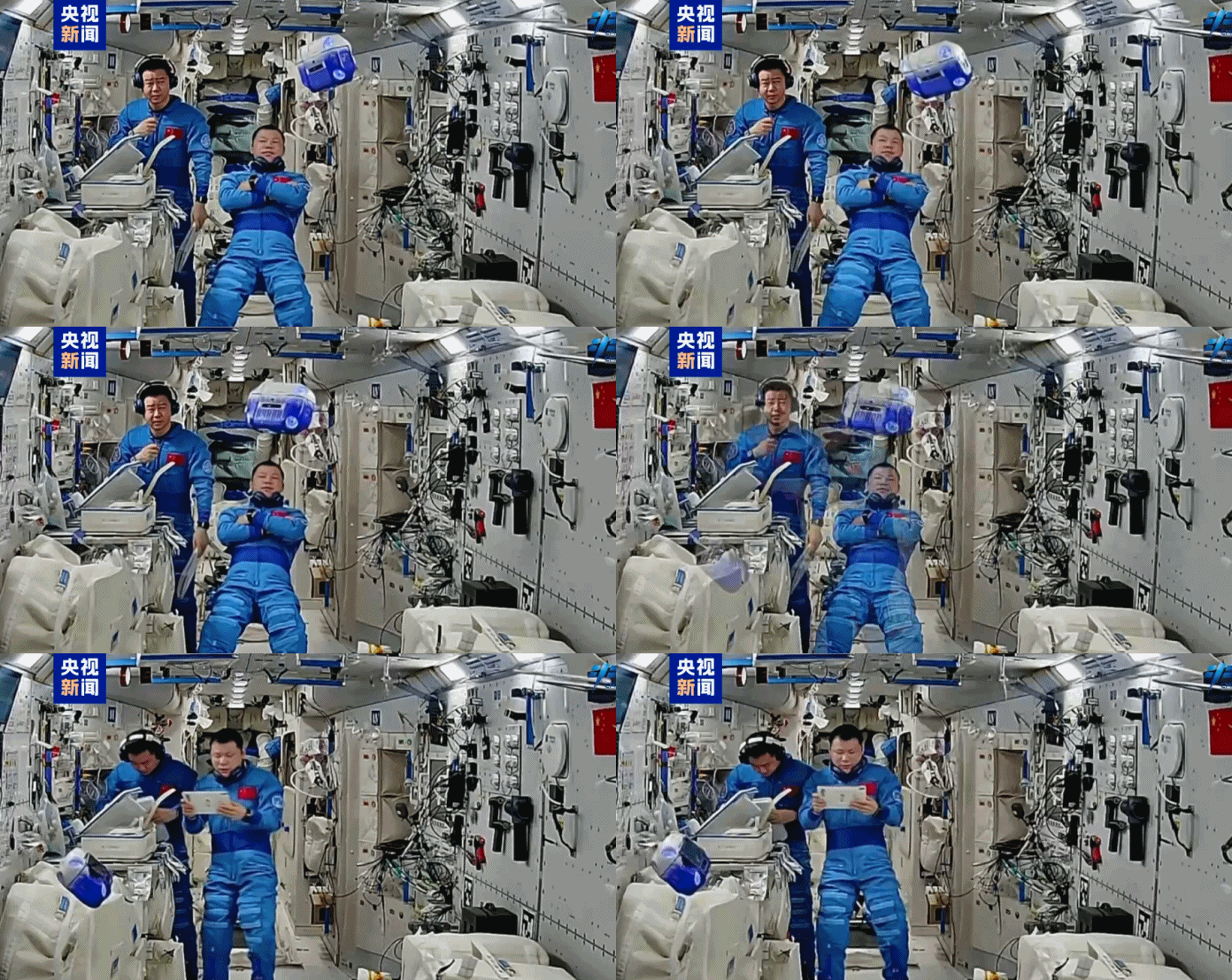
China's Shenzhou-20 crew members interacting with Xiaohang. /CMG

China's Shenzhou-20 crew members interacting with Xiaohang. /CMG

The Shenzhou-20 crew continued working with Xiaohang to explore methods for more efficient human-machine collaboration through experiments on spatial relationships.
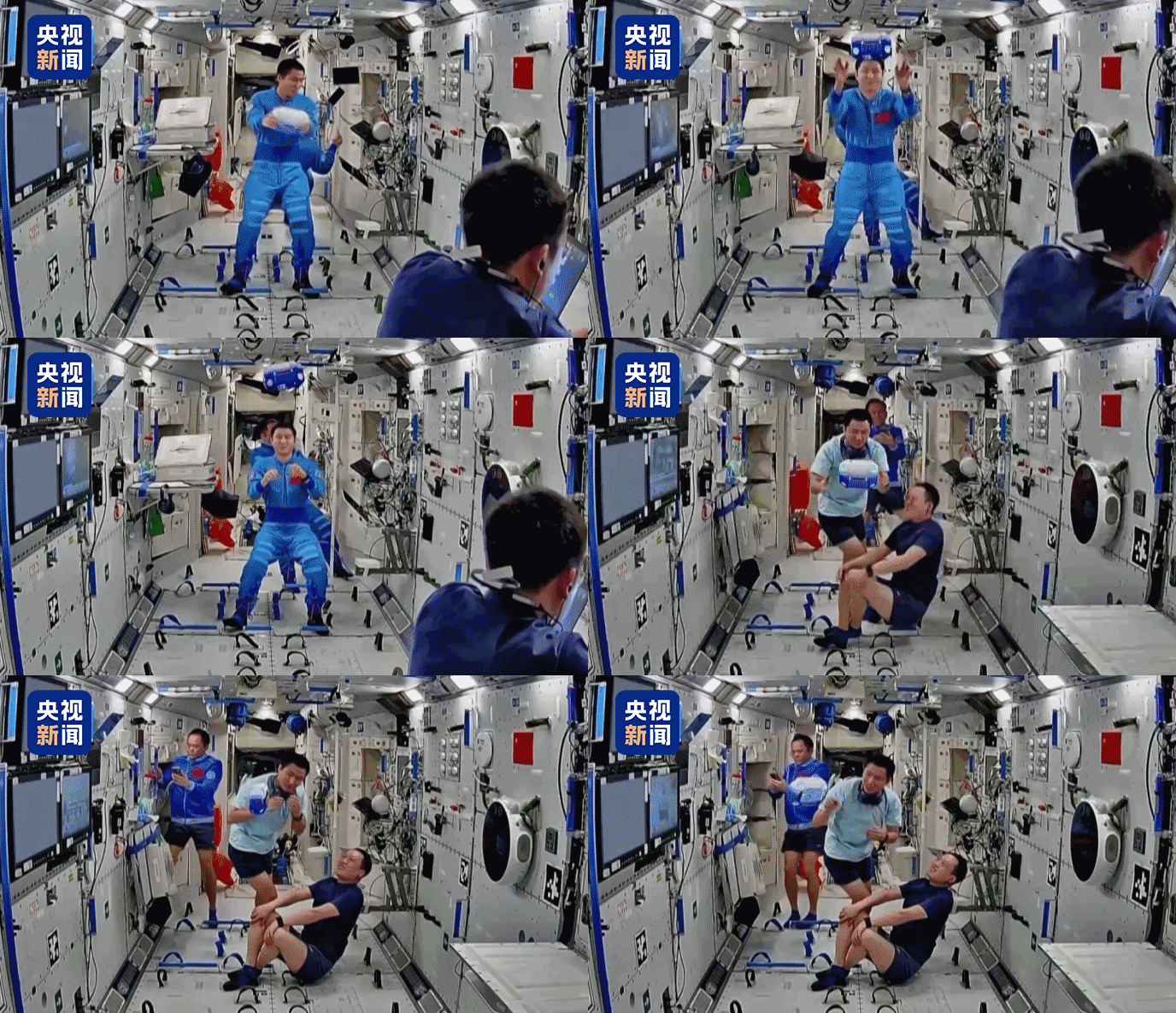
China's Shenzhou-21 crew members interacting with Xiaohang. /CMG

China's Shenzhou-21 crew members interacting with Xiaohang. /CMG

In 2026, the robot again joined forces with the Shenzhou-21 crew, conducting experiments on human-machine spatial relationships and multimodal interaction technologies.
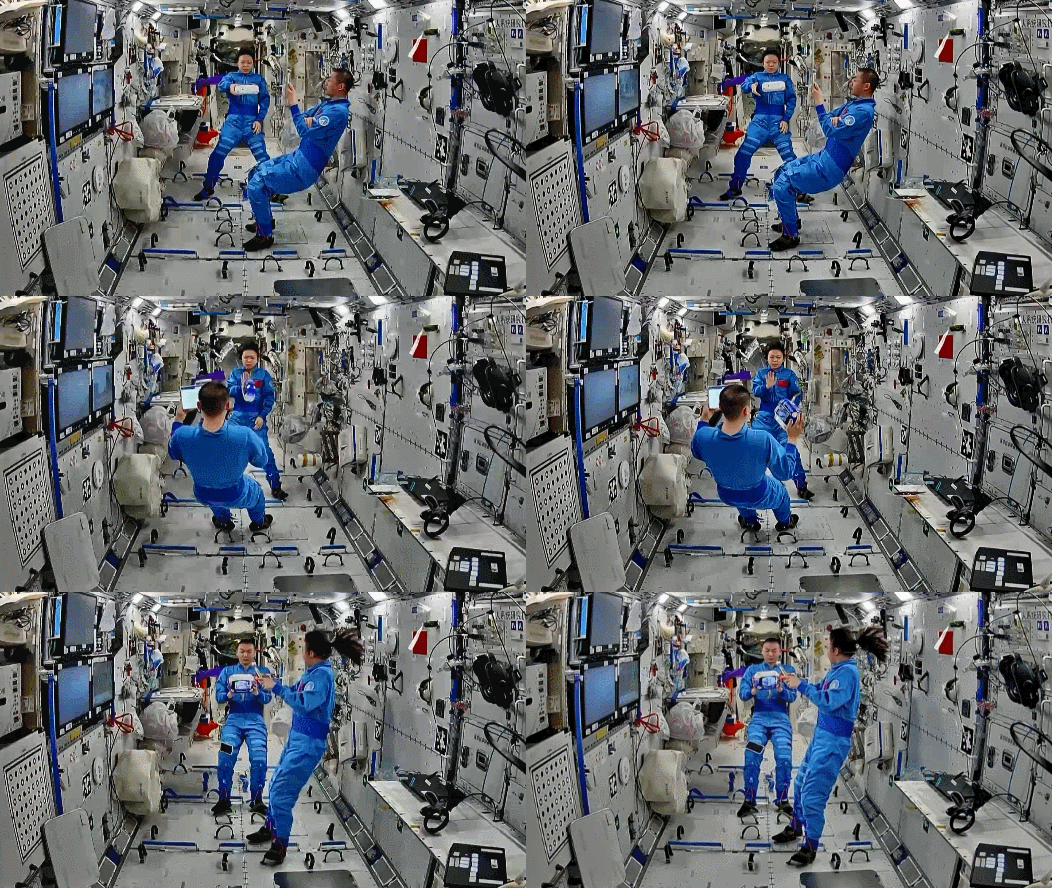
China's Shenzhou-23 crew members interacting with Xiaohang. /CMG

China's Shenzhou-23 crew members interacting with Xiaohang. /CMG

More recently, the Shenzhou-23 crew carried out touch-based interaction tests with the robot, collecting data to optimize future in-orbit robot motion planning.

Each round of experiments has helped Xiaohang become more intelligent and better understand astronauts' needs, evolving into a smarter and more reliable space companion.


Original Text (This is the original text for your reference.)

The first intelligent flying robot aboard China's space station, Xiaohang, is becoming an increasingly capable assistant for astronauts, supporting scientific experiments and daily operations in orbit.

Xiaohang made its debut in the space station on January 1, 2025. Since then, it has worked with four crews, conducting multiple rounds of in-orbit verification and continuously improving through data collection and experiments.

By interacting with Xiaohang and human-machine collaborative interaction experimental software, astronauts have carried out research on human-machine spatial relationships, robot behavior representation and multimodal interaction technologies, helping enhance mission efficiency.

The robot can also carry out cabin inspections, monitor equipment and take photos. Through voice commands, astronauts can ask the robot to record key information such as experiment procedures and equipment conditions, making it an important assistant in space.

China's Shenzhou-19 crew members interacting with the intelligent robot Xiaohang. /CMG

China's Shenzhou-19 crew members interacting with the intelligent robot Xiaohang. /CMG

In 2025, Xiaohang first partnered with the Shenzhou-19 crew, conducting experiments including multimodal interaction technology research, further enhancing coordination between astronauts and the robot.

China's Shenzhou-20 crew members interacting with Xiaohang. /CMG

China's Shenzhou-20 crew members interacting with Xiaohang. /CMG

The Shenzhou-20 crew continued working with Xiaohang to explore methods for more efficient human-machine collaboration through experiments on spatial relationships.

China's Shenzhou-21 crew members interacting with Xiaohang. /CMG

China's Shenzhou-21 crew members interacting with Xiaohang. /CMG

In 2026, the robot again joined forces with the Shenzhou-21 crew, conducting experiments on human-machine spatial relationships and multimodal interaction technologies.

China's Shenzhou-23 crew members interacting with Xiaohang. /CMG

China's Shenzhou-23 crew members interacting with Xiaohang. /CMG

More recently, the Shenzhou-23 crew carried out touch-based interaction tests with the robot, collecting data to optimize future in-orbit robot motion planning.

Each round of experiments has helped Xiaohang become more intelligent and better understand astronauts' needs, evolving into a smarter and more reliable space companion.

Comments

    Something to say?

    Login or Sign up for free

    Disclaimer: The translated content is provided by third-party translation service providers, and IKCEST shall not assume any responsibility for the accuracy and legality of the content.
    Translate engine
    Article's language
    English
    中文
    Pусск
    Français
    Español
    العربية
    Português
    Kikongo
    Dutch
    kiswahili
    هَوُسَ
    IsiZulu
    Action
    Related

    Report

    Select your report category *


    Reason *


    By pressing send, your feedback will be used to improve IKCEST. Your privacy will be protected.

    Submit
    Cancel