




 User Center
 My Training Class
 Feedback


Record-breaking heat has pushed electricity demand to new highs in China this summer, testing the flexibility of the country's power grid as cooling needs surge.
Data from the National Energy Administration showed that China's peak electricity load reached 1.553 billion kilowatts this summer, about 45 million kilowatts higher than the previous record.
To manage rising demand during extreme heat, China is turning to technologies including energy storage, virtual power plants and long-distance power transmission to build a more flexible grid.
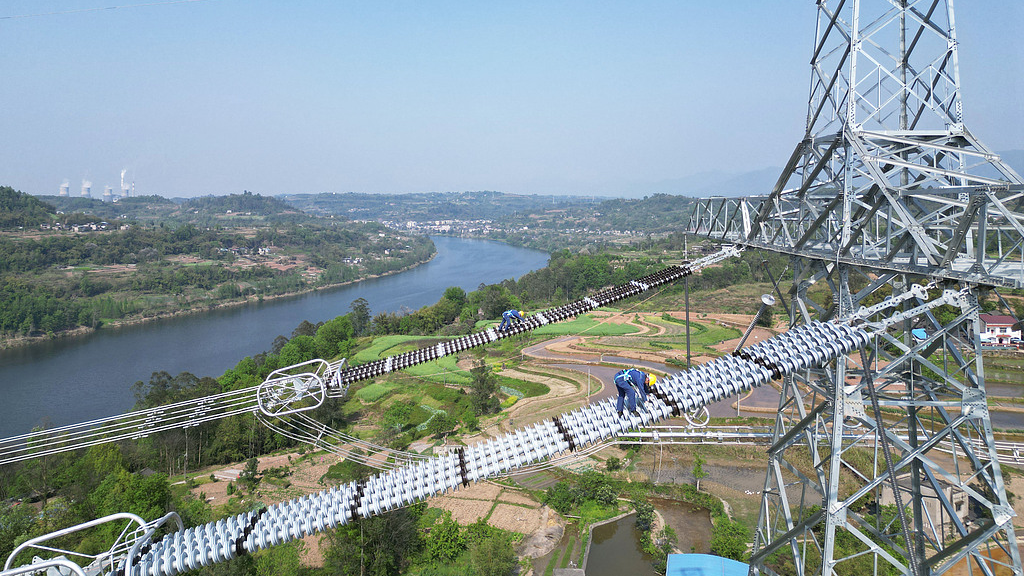
State Grid workers inspect transmission towers as the Chongqing section of the ±800 kV Hami-Chongqing ultra-high-voltage transmission project completes line inspection, Chongqing Municipality, China, April 8, 2025. /VCG
Chongqing strengthens its power grid with diversified resources
Chongqing, a city known for its hot summers, has seen electricity demand rise as temperatures remain high. This summer, the city experienced 25 consecutive days with temperatures above 35 degrees Celsius, while the power grid's peak load reached 31.4 million kilowatts, a record high.
Despite the rising demand, grid operators have been more confident this year, thanks to a more diversified power supply system.
One major change is the increased electricity transmission from Xinjiang Uygur Autonomous Region to Chongqing Municipality. This summer, electricity delivered through the channel rose from four million kilowatts last year to six million kilowatts, providing power capacity equivalent to two of Chongqing's largest thermal power plants. About half of the electricity transmitted from Xinjiang comes from renewable sources, including wind and solar power.
After arriving in Chongqing, part of the electricity is stored in the city's 12 energy storage facilities. Like large-scale batteries, these facilities store electricity when demand is lower and release it quickly when demand rises.
At one storage facility, the system increased output from zero to 180 megawatts shortly after receiving a dispatch order, quickly providing power equivalent to more than 50,000 household air conditioners operating at the same time.
From relying mainly on local hydropower and thermal power to using imported electricity, renewable energy and energy storage, Chongqing is building a more flexible power system to cope with extreme heat.
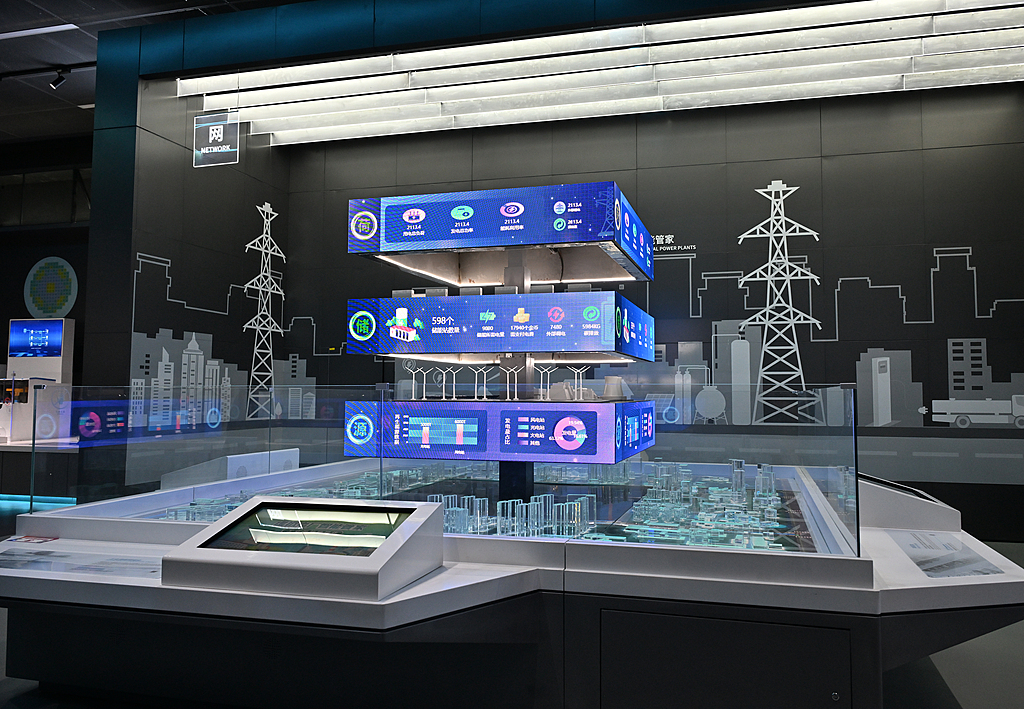
A virtual power plant intelligent management system is displayed at the new Shenzhen Science and Technology Museum in Shenzhen, Guangdong Province, south China, June 24, 2025. /VCG
Virtual power plants add flexibility to the grid
Beyond traditional power plants, virtual power plants are becoming a new way to help manage electricity demand during peak periods.
In Shenzhen, where high temperatures have pushed electricity peaks more than a month earlier than usual, virtual power plants are being used to ease pressure on the grid.
Unlike conventional power stations, virtual power plants do not generate electricity. Instead, they use digital platforms to connect and coordinate distributed resources, including charging facilities and electricity users, allowing the grid to better balance electricity demand when consumption rises.
The Shenzhen Virtual Power Plant Management Center said its platform can coordinate resources from 61 operators and more than 14,000 users, providing up to 1.4 million kilowatts of adjustable capacity during periods of high demand.
The center has also introduced an AI model that analyzes real-time grid conditions, identifies potential overload risks and helps determine where and how much electricity demand needs to be adjusted.
Virtual power plants are now being used in multiple regions, including Shanghai, Jiangsu, Anhui and Zhejiang. Across China, more than 470 virtual power plants have been established, with a combined adjustment capacity exceeding 16 million kilowatts.
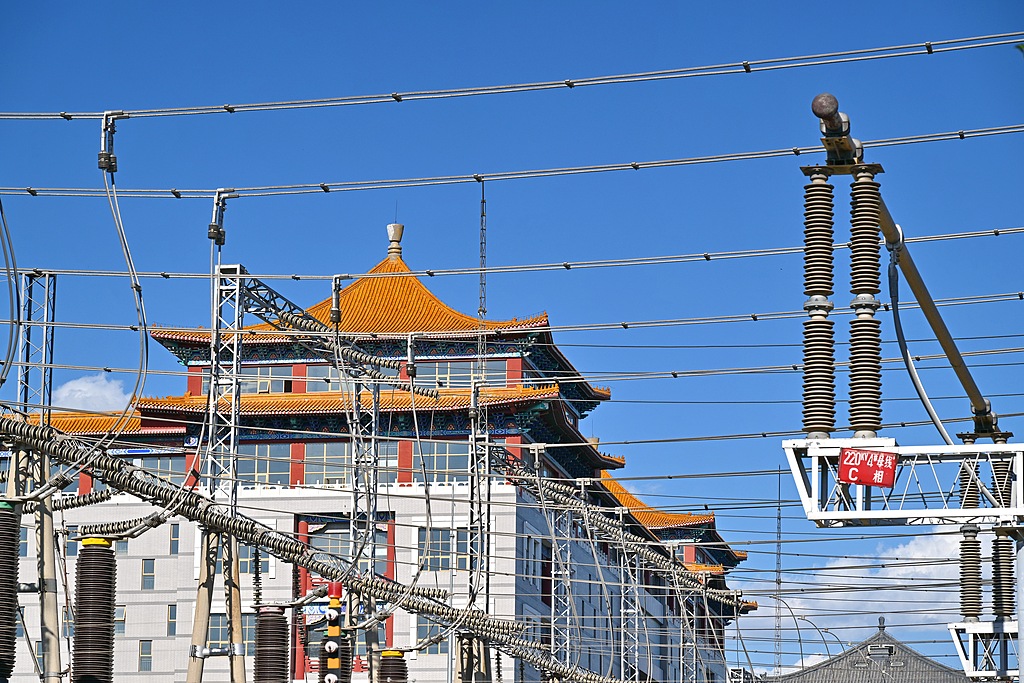
A view of the Beijing power grid operated by State Grid in Beijing, China, June 2, 2025. /VCG
Cross-regional power transmission balances supply and demand
Beyond local solutions, China is also using long-distance power transmission to balance electricity supply and demand across regions.
This summer, an average of more than five billion kilowatt-hours of electricity has been transmitted across provincial borders every day, helping ease pressure in areas facing high demand.
In Beijing, the power grid's maximum load reached 29.399 million kilowatts on August 6, setting a new record. To support the capital's electricity supply, renewable power from Qinghai and Heilongjiang was transmitted to Beijing for the first time.
The two sources complement each other, with solar power helping meet daytime cooling demand and wind power supporting evening peaks.
By combining energy storage, digital management and large-scale power transmission, China is working to build a more flexible electricity system that can better respond to challenges posed by increasingly frequent extreme weather events.




 Report
 Share
Share





Comments
Something to say?
Login or Sign up for free