

Welcome to the IKCEST
EU expands AI Act with transparency rules for general-purpose AI
VCG

VCG

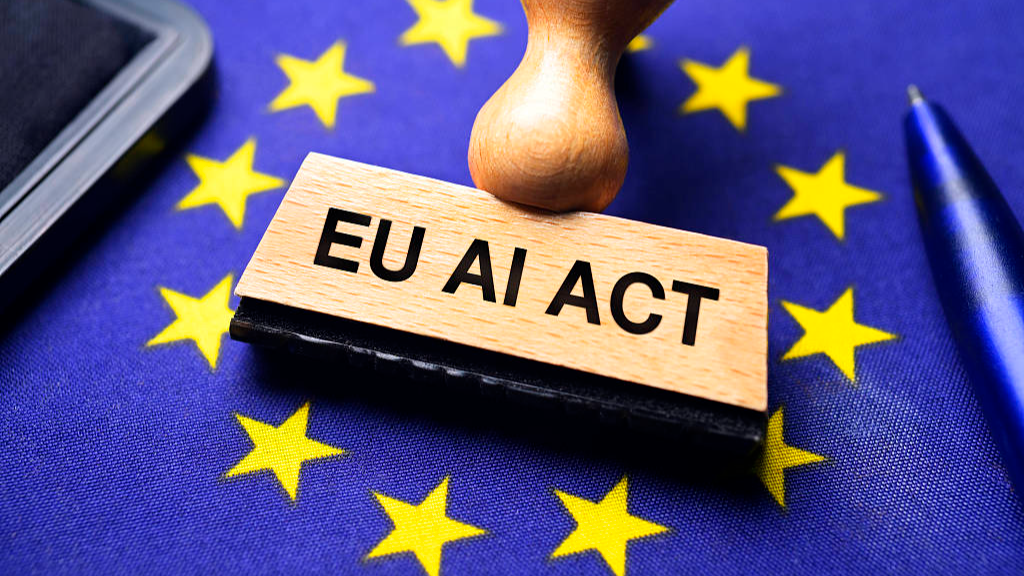
The European Union on Sunday expanded the scope of its Artificial Intelligence Act, bringing into force new transparency requirements and rules governing providers of general-purpose artificial intelligence (AI) models.

The new rules, which took effect on August 2, require interactive AI systems such as chatbots to clearly inform users that they are interacting with AI rather than a human.

Under the transparency requirements, AI-generated or AI-manipulated content, including images, videos and audio known as "deepfakes," must be clearly labeled. AI-generated or modified content must also include machine-readable markers to make it easier to identify, according to the European Commission.

The Commission said the measures are intended to reduce deception and manipulation associated with AI-generated content.

The rules also empower the EU AI Office to enforce provisions of the AI Act on providers of general-purpose AI models.

Providers of advanced general-purpose AI models that may pose systemic risks are subject to additional obligations aimed at mitigating large-scale harms, including risks related to cyberattacks, loss of model control, harmful manipulation and violations of fundamental rights.

The EU's Artificial Intelligence Act entered into force on August 1, 2024, establishing a risk-based regulatory framework that classifies AI systems into four categories: unacceptable risk, high risk, transparency risk, and minimal or no risk.


Original Text (This is the original text for your reference.)

VCG

VCG

The European Union on Sunday expanded the scope of its Artificial Intelligence Act, bringing into force new transparency requirements and rules governing providers of general-purpose artificial intelligence (AI) models.

The new rules, which took effect on August 2, require interactive AI systems such as chatbots to clearly inform users that they are interacting with AI rather than a human.

Under the transparency requirements, AI-generated or AI-manipulated content, including images, videos and audio known as "deepfakes," must be clearly labeled. AI-generated or modified content must also include machine-readable markers to make it easier to identify, according to the European Commission.

The Commission said the measures are intended to reduce deception and manipulation associated with AI-generated content.

The rules also empower the EU AI Office to enforce provisions of the AI Act on providers of general-purpose AI models.

Providers of advanced general-purpose AI models that may pose systemic risks are subject to additional obligations aimed at mitigating large-scale harms, including risks related to cyberattacks, loss of model control, harmful manipulation and violations of fundamental rights.

The EU's Artificial Intelligence Act entered into force on August 1, 2024, establishing a risk-based regulatory framework that classifies AI systems into four categories: unacceptable risk, high risk, transparency risk, and minimal or no risk.

Comments

    Something to say?

    Login or Sign up for free

    Disclaimer: The translated content is provided by third-party translation service providers, and IKCEST shall not assume any responsibility for the accuracy and legality of the content.
    Translate engine
    Article's language
    English
    中文
    Pусск
    Français
    Español
    العربية
    Português
    Kikongo
    Dutch
    kiswahili
    هَوُسَ
    IsiZulu
    Action
    Related

    Report

    Select your report category *


    Reason *


    By pressing send, your feedback will be used to improve IKCEST. Your privacy will be protected.

    Submit
    Cancel