




 User Center
 My Training Class
 Feedback


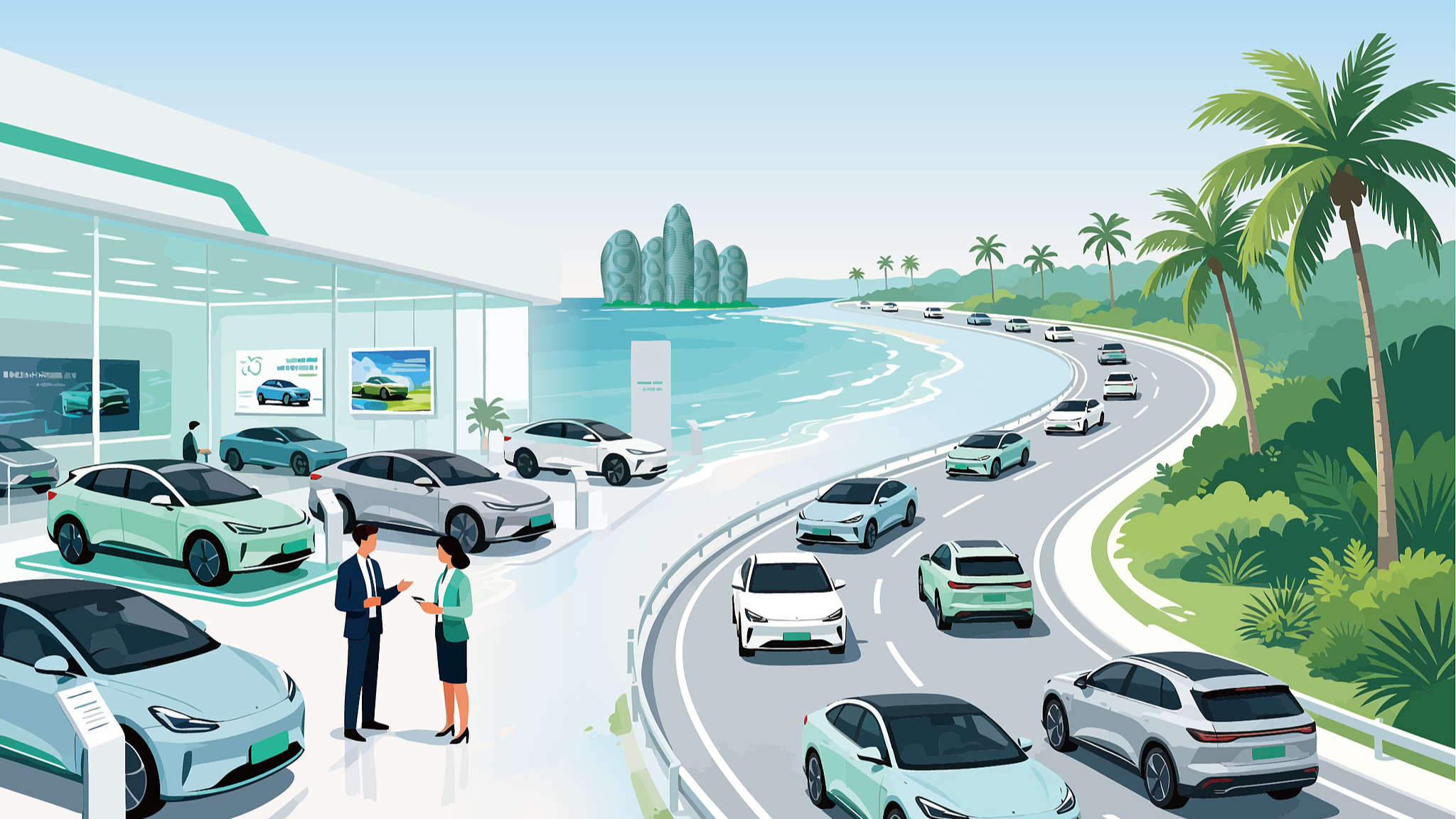
A graphic image juxtaposing an electric vehicle (EV) showroom with EVs driving on a road. /VCG
South China's Hainan Province will steadily advance the implementation of a ban on the sale of fuel-powered vehicles by 2030, according to a recently released development plan.
The plan aims to further promote the development of green and low-carbon transportation, according to the 15th Five-Year Plan for the construction of Beautiful Hainan, released by the Hainan provincial government on July 3.
By 2030, new energy vehicles (NEVs) are expected to account for 45% of all vehicles in Hainan, up from 23.75% in 2025, according to the plan. The move will make Hainan the first provincial-level region in China to cease the sale of fuel-powered vehicles.
During the 14th Five-Year Plan period (2021-2025), Hainan deepened its efforts to develop a clean-energy island. New energy has become the province's largest source of electricity generation, and the province ranks first among China's provincial-level regions in NEV market penetration rate and second in the proportion of NEVs in vehicle ownership.
The plan proposed building green transportation into a signature feature of the Hainan Free Trade Port. By 2030, all newly added or replaced vehicles in the public service and social operation sectors, except those for special purposes, will use clean energy, while all newly added or replaced private vehicles will be powered by new energy.
Hainan will also ensure that the ratio of vehicles to charging facilities remains below 2.5:1, according to the plan.
The province will promote demonstration applications of hydrogen fuel cell vehicles in areas including heavy-duty trucks, cold-chain logistics and public transportation. It will also explore the construction of zero-carbon freight corridors and improve the overall layout of hydrogen-based energy supply facilities across land and maritime transportation networks.
Efforts will be made to support Yangpu in building a green, low-carbon international shipping hub. The province will conduct research on demonstration routes for a green shipping zone in the Qiongzhou Strait, increase the use of shore power by ships at ports, and promote demonstration applications of green marine fuels, including biodiesel, green ammonia and green methanol.
Hainan will develop integrated offshore comprehensive energy platforms that combine electricity, hydrogen, ammonia and methanol, as well as hydrogen-based energy refueling centers. The province will also establish transportation energy systems that integrate distributed photovoltaic power generation, energy storage and microgrids at transportation hubs, based on local conditions.
The plan called for maximizing the use of ground power systems at large airports and steadily increasing the application of sustainable aviation fuel (SAF).
Hainan will also actively promote the capacity expansion and upgrading of the western conventional railway and the construction of the Yangpu railway branch line. The province will encourage the shift of freight transport from road to rail and promote rail-sea intermodal transportation.
It will also advance the coordinated development of smart transportation and green logistics and further deepen the pilot program for the comprehensive electrification of vehicles in public sectors in Haikou.




 Report
 Share
Share





Comments
Something to say?
Login or Sign up for free