

Welcome to the IKCEST
China to double EV charging infrastructure to 40 mln by 2030
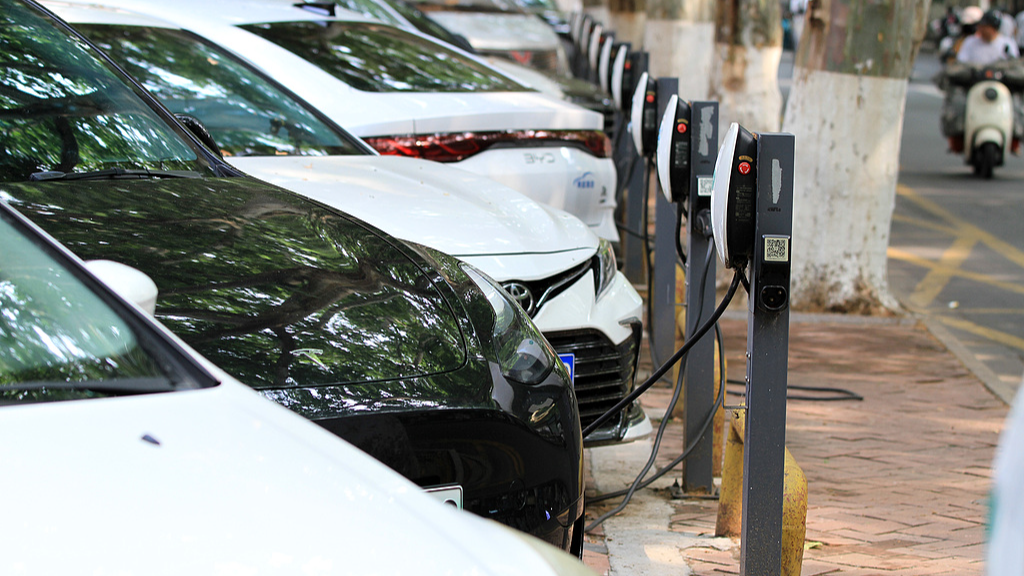
New energy vehicles charge at charging stations Huai'an, east China's Jiangsu Province, June 24, 2026. /VCG

New energy vehicles charge at charging stations Huai'an, east China's Jiangsu Province, June 24, 2026. /VCG

China plans to double its charging infrastructure to 40 million by 2030, according to the National Energy Administration (NEA).

NEA vice administrator Wan Jinsong said at a Friday press conference that China will accelerate new energy infrastructure during the 2026-2030 period. 

Infrastructure is the backbone of the new energy system, Wan said, enabling clean energy such as wind, solar and hydropower to be transmitted, connected to the grid and utilized more efficiently.

China will optimize the development of clean energy bases, including wind and solar projects in the country's northern and western regions, and integrated hydropower, wind and solar bases in the southwest. It will also promote direct green electricity supply where conditions allow, build low- and zero-carbon oil and gas fields, and advance the integrated development of new energy.

The country will improve the grid's ability to connect and absorb new energy, accelerate the construction of a new power system that is safe, reliable, green, low-carbon, resilient and flexible, and increase power system regulation capacity by more than 40%.

China will also speed up the deployment of infrastructure for new technologies and business models, including renewable energy hydrogen production, green fuels, charging facilities, comprehensive use of nuclear energy, virtual power plants and integrated energy stations. By 2030, renewable energy hydrogen production is expected to reach 2 million tonnes, while virtual power plants will have a regulation capacity of more than 50 million kilowatts.


Original Text (This is the original text for your reference.)

New energy vehicles charge at charging stations Huai'an, east China's Jiangsu Province, June 24, 2026. /VCG

New energy vehicles charge at charging stations Huai'an, east China's Jiangsu Province, June 24, 2026. /VCG

China plans to double its charging infrastructure to 40 million by 2030, according to the National Energy Administration (NEA).

NEA vice administrator Wan Jinsong said at a Friday press conference that China will accelerate new energy infrastructure during the 2026-2030 period. 

Infrastructure is the backbone of the new energy system, Wan said, enabling clean energy such as wind, solar and hydropower to be transmitted, connected to the grid and utilized more efficiently.

China will optimize the development of clean energy bases, including wind and solar projects in the country's northern and western regions, and integrated hydropower, wind and solar bases in the southwest. It will also promote direct green electricity supply where conditions allow, build low- and zero-carbon oil and gas fields, and advance the integrated development of new energy.

The country will improve the grid's ability to connect and absorb new energy, accelerate the construction of a new power system that is safe, reliable, green, low-carbon, resilient and flexible, and increase power system regulation capacity by more than 40%.

China will also speed up the deployment of infrastructure for new technologies and business models, including renewable energy hydrogen production, green fuels, charging facilities, comprehensive use of nuclear energy, virtual power plants and integrated energy stations. By 2030, renewable energy hydrogen production is expected to reach 2 million tonnes, while virtual power plants will have a regulation capacity of more than 50 million kilowatts.

Comments

    Something to say?

    Login or Sign up for free

    Disclaimer: The translated content is provided by third-party translation service providers, and IKCEST shall not assume any responsibility for the accuracy and legality of the content.
    Translate engine
    Article's language
    English
    中文
    Pусск
    Français
    Español
    العربية
    Português
    Kikongo
    Dutch
    kiswahili
    هَوُسَ
    IsiZulu
    Action
    Related

    Report

    Select your report category *


    Reason *


    By pressing send, your feedback will be used to improve IKCEST. Your privacy will be protected.

    Submit
    Cancel