

Welcome to the IKCEST
China's Hualong One nuclear reactor enters batch-scale expansion
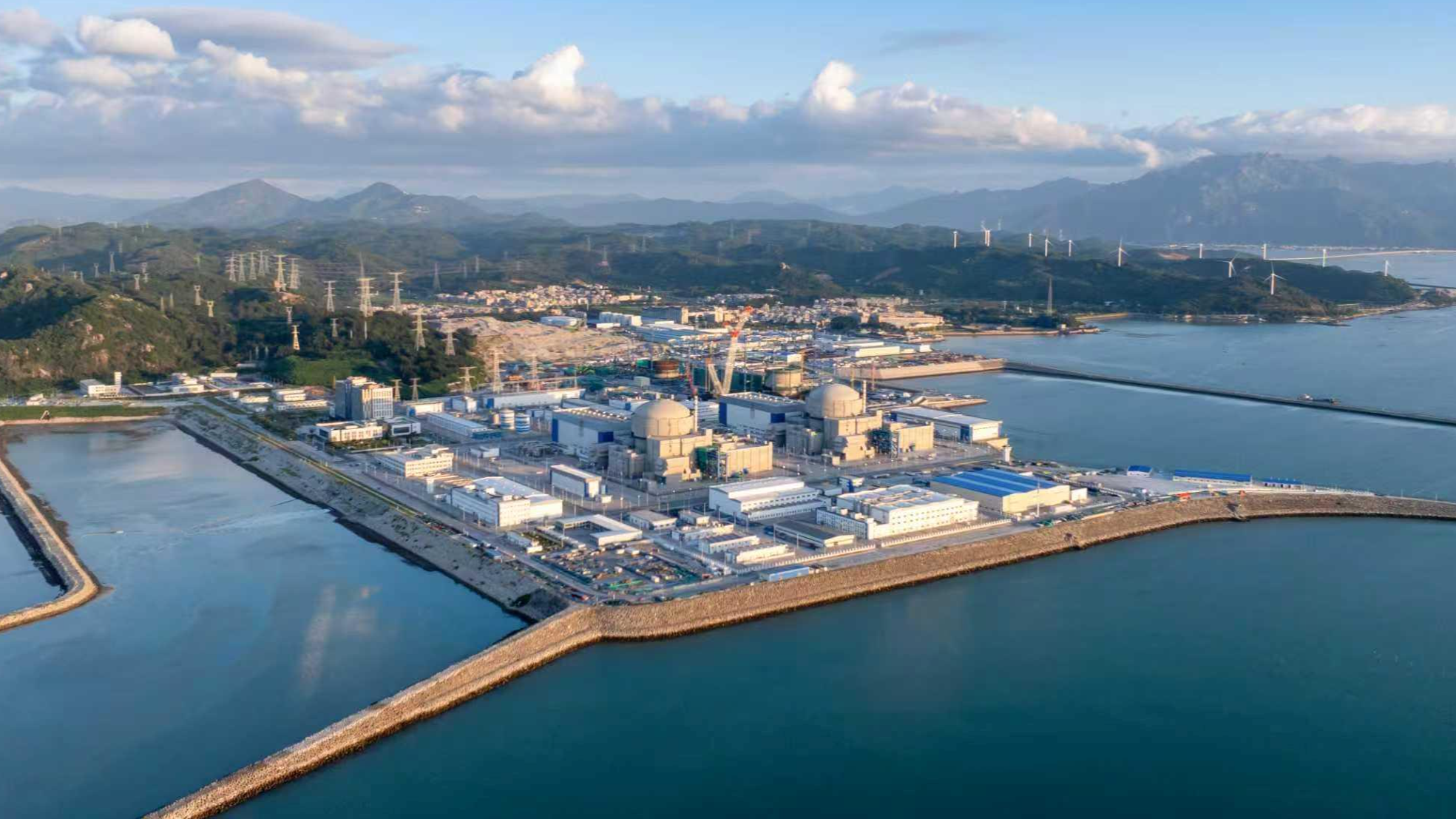
A view of Zhangzhou Nuclear Power Plant in east China's Fujian Province. /CMG

A view of Zhangzhou Nuclear Power Plant in east China's Fujian Province. /CMG

China's domestically developed third-generation nuclear technology, Hualong One, is entering a new stage of accelerated, batch-scale construction across the country, China Media Group reports. With 41 reactors now in operation or under construction, Hualong One has become the world's most widely deployed single reactor design.

In east China's Zhejiang Province, the Cangnan project is undergoing final commissioning before grid connection. In southeast China's Fujian Province, Unit 3 in Zhangzhou is preparing for dome installation. Meanwhile, new units are in construction in south China's Guangdong Province, and east China's Shandong and Jiangsu provinces.

In addition to new projects, China is also expanding capacity in its southern island province of Hainan, where the Changjiang Nuclear Power Base – the world's largest Hualong One complex – recently completed Phase I construction. The expansion is expected to further strengthen China's clean energy supply.

Early in 2026, the world's first Hualong One unit – Fuqing Unit 5 in Fujian – will undergo its first refueling outage, a routine "health check" after five years of commercial service. Since coming online, the unit has generated more than 43 billion kilowatt-hours of clean power, while serving as a key platform for validating domestically produced reactor components.

With construction accelerating and more reactors nearing operation, Hualong One is poised to play an increasingly central role in China's energy transition and its push toward green, low-carbon development.


Original Text (This is the original text for your reference.)

A view of Zhangzhou Nuclear Power Plant in east China's Fujian Province. /CMG

A view of Zhangzhou Nuclear Power Plant in east China's Fujian Province. /CMG

China's domestically developed third-generation nuclear technology, Hualong One, is entering a new stage of accelerated, batch-scale construction across the country, China Media Group reports. With 41 reactors now in operation or under construction, Hualong One has become the world's most widely deployed single reactor design.

In east China's Zhejiang Province, the Cangnan project is undergoing final commissioning before grid connection. In southeast China's Fujian Province, Unit 3 in Zhangzhou is preparing for dome installation. Meanwhile, new units are in construction in south China's Guangdong Province, and east China's Shandong and Jiangsu provinces.

In addition to new projects, China is also expanding capacity in its southern island province of Hainan, where the Changjiang Nuclear Power Base – the world's largest Hualong One complex – recently completed Phase I construction. The expansion is expected to further strengthen China's clean energy supply.

Early in 2026, the world's first Hualong One unit – Fuqing Unit 5 in Fujian – will undergo its first refueling outage, a routine "health check" after five years of commercial service. Since coming online, the unit has generated more than 43 billion kilowatt-hours of clean power, while serving as a key platform for validating domestically produced reactor components.

With construction accelerating and more reactors nearing operation, Hualong One is poised to play an increasingly central role in China's energy transition and its push toward green, low-carbon development.

Comments

    Something to say?

    Login or Sign up for free

    Disclaimer: The translated content is provided by third-party translation service providers, and IKCEST shall not assume any responsibility for the accuracy and legality of the content.
    Translate engine
    Article's language
    English
    中文
    Pусск
    Français
    Español
    العربية
    Português
    Kikongo
    Dutch
    kiswahili
    هَوُسَ
    IsiZulu
    Action
    Related

    Report

    Select your report category *


    Reason *


    By pressing send, your feedback will be used to improve IKCEST. Your privacy will be protected.

    Submit
    Cancel