

Welcome to the IKCEST
2026 Winter Olympics to feature AI broadcast innovations
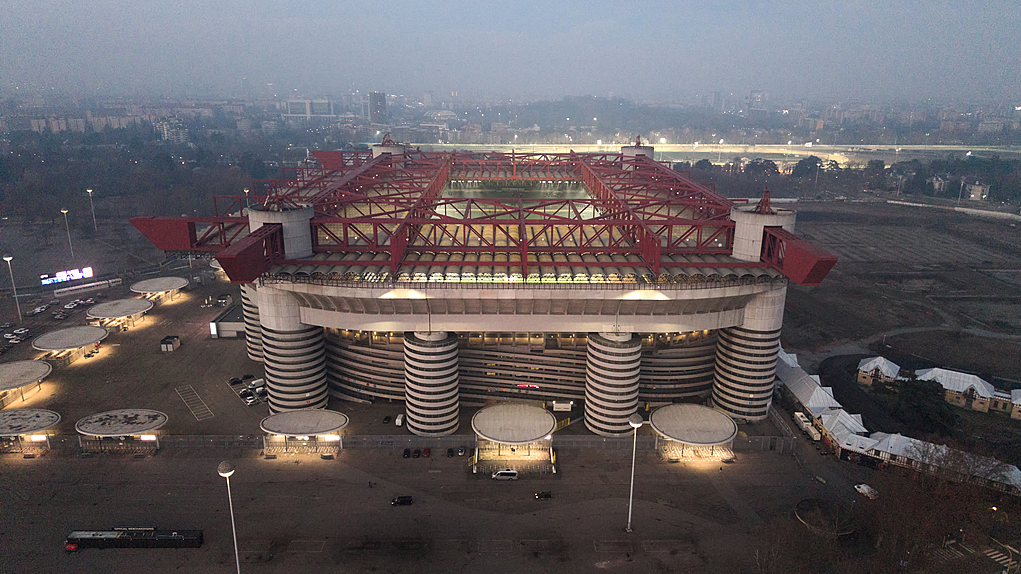
An aerial view displays the Giuseppe Meazza Stadium, where the opening ceremony of the Milano-Cortina 2026 Winter Olympics will be held, in San Siro, Milan, Italy./ VCG

An aerial view displays the Giuseppe Meazza Stadium, where the opening ceremony of the Milano-Cortina 2026 Winter Olympics will be held, in San Siro, Milan, Italy./ VCG

The 2026 Milan-Cortina Winter Olympics will feature a suite of AI-driven broadcast innovations, organizers said at an online media roundtable on Wednesday.

Yiannis Exarchos, CEO of Olympic Broadcasting Services and executive director of Olympic Channel Services, introduced the technological innovations.

A key on-screen innovation developed with Alibaba will be AI-supported real-time 360-degree replays. This system, introduced at the 2024 Paris Olympics, combines multi-camera feeds with stroboscopic analysis to generate detailed multi-angle views, freeze frames and slow-motion sequences within seconds.

Another Winter Olympics debut will be an AI-driven stone-tracking system for curling. It will visualize each stone's path, speed and rotation in real time, using overlaid graphics and data to explain strategic nuances to viewers.

Additionally, an AI tool called Olympic GPT will be launched to provide fans with real-time results, rules and verified information.

The Automatic Media Description platform is tested to help teams manage the huge volume of live video from the Games.

"AI breaks broadcasts into searchable clips, suggests shot descriptions and keywords, and helps users quickly find key moments or highlights, making storytelling faster and easier," said Exarchos.

In terms of content distribution, an automated highlights generation system, which produced over 100,000 unique clips for broadcasters during Paris 2024, will be used for the first time at a Winter Olympics.

First-person view drones will be deployed in sliding sports like bobsleigh and luge. "It really offers you a sense of being part of the competition," Exarchos said, describing the footage that follows athletes at high speed.

A shift to virtual OB vans using cloud-based infrastructure is expected to cut compound space and power use by up to 50 percent compared to traditional broadcast trucks.


Source(s): Xinhua News Agency

Original Text (This is the original text for your reference.)

An aerial view displays the Giuseppe Meazza Stadium, where the opening ceremony of the Milano-Cortina 2026 Winter Olympics will be held, in San Siro, Milan, Italy./ VCG

An aerial view displays the Giuseppe Meazza Stadium, where the opening ceremony of the Milano-Cortina 2026 Winter Olympics will be held, in San Siro, Milan, Italy./ VCG

The 2026 Milan-Cortina Winter Olympics will feature a suite of AI-driven broadcast innovations, organizers said at an online media roundtable on Wednesday.

Yiannis Exarchos, CEO of Olympic Broadcasting Services and executive director of Olympic Channel Services, introduced the technological innovations.

A key on-screen innovation developed with Alibaba will be AI-supported real-time 360-degree replays. This system, introduced at the 2024 Paris Olympics, combines multi-camera feeds with stroboscopic analysis to generate detailed multi-angle views, freeze frames and slow-motion sequences within seconds.

Another Winter Olympics debut will be an AI-driven stone-tracking system for curling. It will visualize each stone's path, speed and rotation in real time, using overlaid graphics and data to explain strategic nuances to viewers.

Additionally, an AI tool called Olympic GPT will be launched to provide fans with real-time results, rules and verified information.

The Automatic Media Description platform is tested to help teams manage the huge volume of live video from the Games.

"AI breaks broadcasts into searchable clips, suggests shot descriptions and keywords, and helps users quickly find key moments or highlights, making storytelling faster and easier," said Exarchos.

In terms of content distribution, an automated highlights generation system, which produced over 100,000 unique clips for broadcasters during Paris 2024, will be used for the first time at a Winter Olympics.

First-person view drones will be deployed in sliding sports like bobsleigh and luge. "It really offers you a sense of being part of the competition," Exarchos said, describing the footage that follows athletes at high speed.

A shift to virtual OB vans using cloud-based infrastructure is expected to cut compound space and power use by up to 50 percent compared to traditional broadcast trucks.

Source(s): Xinhua News Agency
Comments

    Something to say?

    Login or Sign up for free

    Disclaimer: The translated content is provided by third-party translation service providers, and IKCEST shall not assume any responsibility for the accuracy and legality of the content.
    Translate engine
    Article's language
    English
    中文
    Pусск
    Français
    Español
    العربية
    Português
    Kikongo
    Dutch
    kiswahili
    هَوُسَ
    IsiZulu
    Action
    Related

    Report

    Select your report category *


    Reason *


    By pressing send, your feedback will be used to improve IKCEST. Your privacy will be protected.

    Submit
    Cancel