

Welcome to the IKCEST
Chinese scientists use AI to boost drug screening by a millionfold
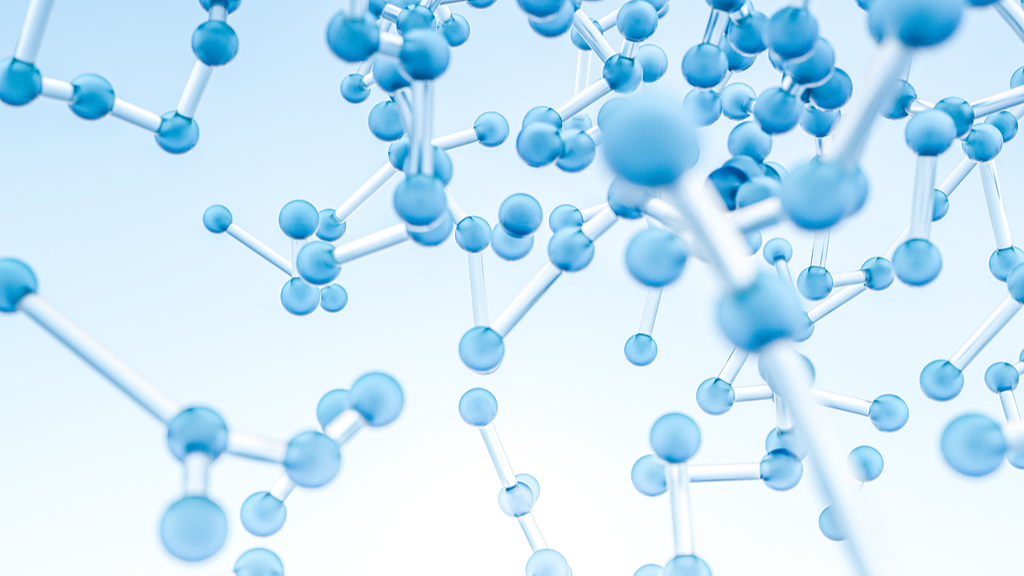
An illustration. /VCG

An illustration. /VCG

A long-sought goal in computational biology – often described as the "holy grail" of chemical genomics – may now be within reach. Researchers from Tsinghua University and the Beijing Academy of Artificial Intelligence (BAAI) have unveiled an AI-driven drug screening platform capable of mapping drugs across the entire human genome at unprecedented speed.

The platform, known as DrugCLIP, was developed by a research team led by Professor Lan Yanyan at the Joint Center for Computational Health, established by Tsinghua University's Institute for AI Industry Research (AIR) and BAAI. The study was published on January 9 in the journal Science.

Chemical genomics aims to identify drug candidates for all protein targets encoded by the human genome. While the genome encodes roughly 20,000 proteins – around 90 percent of which are associated with disease – most remain "undruggable" due to technical and computational limitations. Traditional virtual screening methods struggle to cope with the vast search space created by millions of potential targets and an almost infinite pool of small-molecule compounds. Even with today's most advanced molecular docking tools, genome-scale screening could take centuries.

DrugCLIP addresses this bottleneck by achieving a millionfold increase in screening speed and, for the first time, completing drug-target mapping at the whole-genome scale. Rather than simulating the dynamic process of how a molecule fits into a protein pocket, the platform introduces a novel "vectorized binding space" that represents protein pockets and small molecules as mathematical vectors. Using deep contrastive learning, complex biochemical interactions are transformed into a vector retrieval problem – a computational task that has been extensively optimized in computer science.

The platform was first released publicly in June 2025 by Tsinghua AIR and BAAI and has since been made freely available to the global research community. To date, more than a thousand researchers worldwide have used DrugCLIP, completing tens of thousands of large-scale screening tasks.

Wang Xiaodong, an academician of the Chinese Academy of Sciences and director of the National Institute of Biological Sciences in Beijing, described the platform as transformative. "DrugCLIP not only accelerates drug discovery but more importantly expands the chemical space of candidate compounds and lowers the threshold for pharmaceutical innovation," he said. "Its most meaningful application lies in identifying entirely new druggable targets."

Experts say the publication of DrugCLIP in Science marks the arrival of a "post-AlphaFold era" in drug discovery – one defined by large-scale, systematic exploration and open collaboration.

(Cover via VCG)

Original Text (This is the original text for your reference.)

An illustration. /VCG

An illustration. /VCG

A long-sought goal in computational biology – often described as the "holy grail" of chemical genomics – may now be within reach. Researchers from Tsinghua University and the Beijing Academy of Artificial Intelligence (BAAI) have unveiled an AI-driven drug screening platform capable of mapping drugs across the entire human genome at unprecedented speed.

The platform, known as DrugCLIP, was developed by a research team led by Professor Lan Yanyan at the Joint Center for Computational Health, established by Tsinghua University's Institute for AI Industry Research (AIR) and BAAI. The study was published on January 9 in the journal Science.

Chemical genomics aims to identify drug candidates for all protein targets encoded by the human genome. While the genome encodes roughly 20,000 proteins – around 90 percent of which are associated with disease – most remain "undruggable" due to technical and computational limitations. Traditional virtual screening methods struggle to cope with the vast search space created by millions of potential targets and an almost infinite pool of small-molecule compounds. Even with today's most advanced molecular docking tools, genome-scale screening could take centuries.

DrugCLIP addresses this bottleneck by achieving a millionfold increase in screening speed and, for the first time, completing drug-target mapping at the whole-genome scale. Rather than simulating the dynamic process of how a molecule fits into a protein pocket, the platform introduces a novel "vectorized binding space" that represents protein pockets and small molecules as mathematical vectors. Using deep contrastive learning, complex biochemical interactions are transformed into a vector retrieval problem – a computational task that has been extensively optimized in computer science.

The platform was first released publicly in June 2025 by Tsinghua AIR and BAAI and has since been made freely available to the global research community. To date, more than a thousand researchers worldwide have used DrugCLIP, completing tens of thousands of large-scale screening tasks.

Wang Xiaodong, an academician of the Chinese Academy of Sciences and director of the National Institute of Biological Sciences in Beijing, described the platform as transformative. "DrugCLIP not only accelerates drug discovery but more importantly expands the chemical space of candidate compounds and lowers the threshold for pharmaceutical innovation," he said. "Its most meaningful application lies in identifying entirely new druggable targets."

Experts say the publication of DrugCLIP in Science marks the arrival of a "post-AlphaFold era" in drug discovery – one defined by large-scale, systematic exploration and open collaboration.

(Cover via VCG)

Comments

    Something to say?

    Login or Sign up for free

    Disclaimer: The translated content is provided by third-party translation service providers, and IKCEST shall not assume any responsibility for the accuracy and legality of the content.
    Translate engine
    Article's language
    English
    中文
    Pусск
    Français
    Español
    العربية
    Português
    Kikongo
    Dutch
    kiswahili
    هَوُسَ
    IsiZulu
    Action
    Related

    Report

    Select your report category *


    Reason *


    By pressing send, your feedback will be used to improve IKCEST. Your privacy will be protected.

    Submit
    Cancel