

Welcome to the IKCEST
Looking at key moments in 48 years of China-France space cooperation
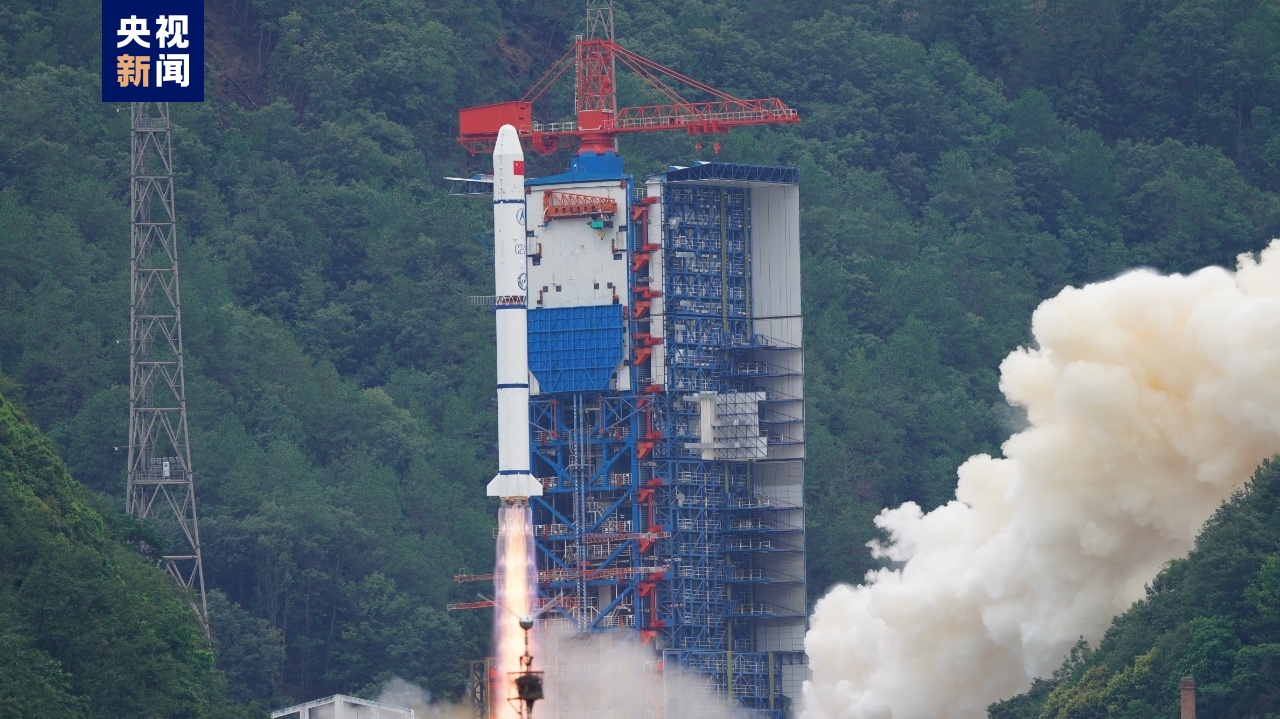
China launches the SVOM aboard a Long March-2C rocket from the Xichang Satellite Launch Center. /CMG

China launches the SVOM aboard a Long March-2C rocket from the Xichang Satellite Launch Center. /CMG

China and France have maintained diplomatic ties for more than 60 years, with space cooperation spanning 48 years. The partnership traces back to 1977, when a Chinese aerospace technology delegation visited French aerospace research institutions, marking the beginning of long-term collaboration in the field.

Since the two governments signed a cooperation agreement in 1997, China and France have accelerated collaboration in earth observation, deep space exploration, satellite development, lunar exploration and manned spaceflight, achieving positive results.

A Long March-2C carrier rocket lifted off from the Jiuquan Satellite Launch Center on October 29, 2018, successfully placing the China–France Oceanography Satellite (CFOSat) into its preset orbit. This satellite was jointly developed by the China National Space Administration (CNSA) and France's Centre National d'Etudes Spatiales (CNES). It marked the transition from previous satellite import-export and launch service collaborations to joint satellite development and data sharing, establishing a significant milestone in the countries' space science partnership, representing a new phase in Sino-French space cooperation.
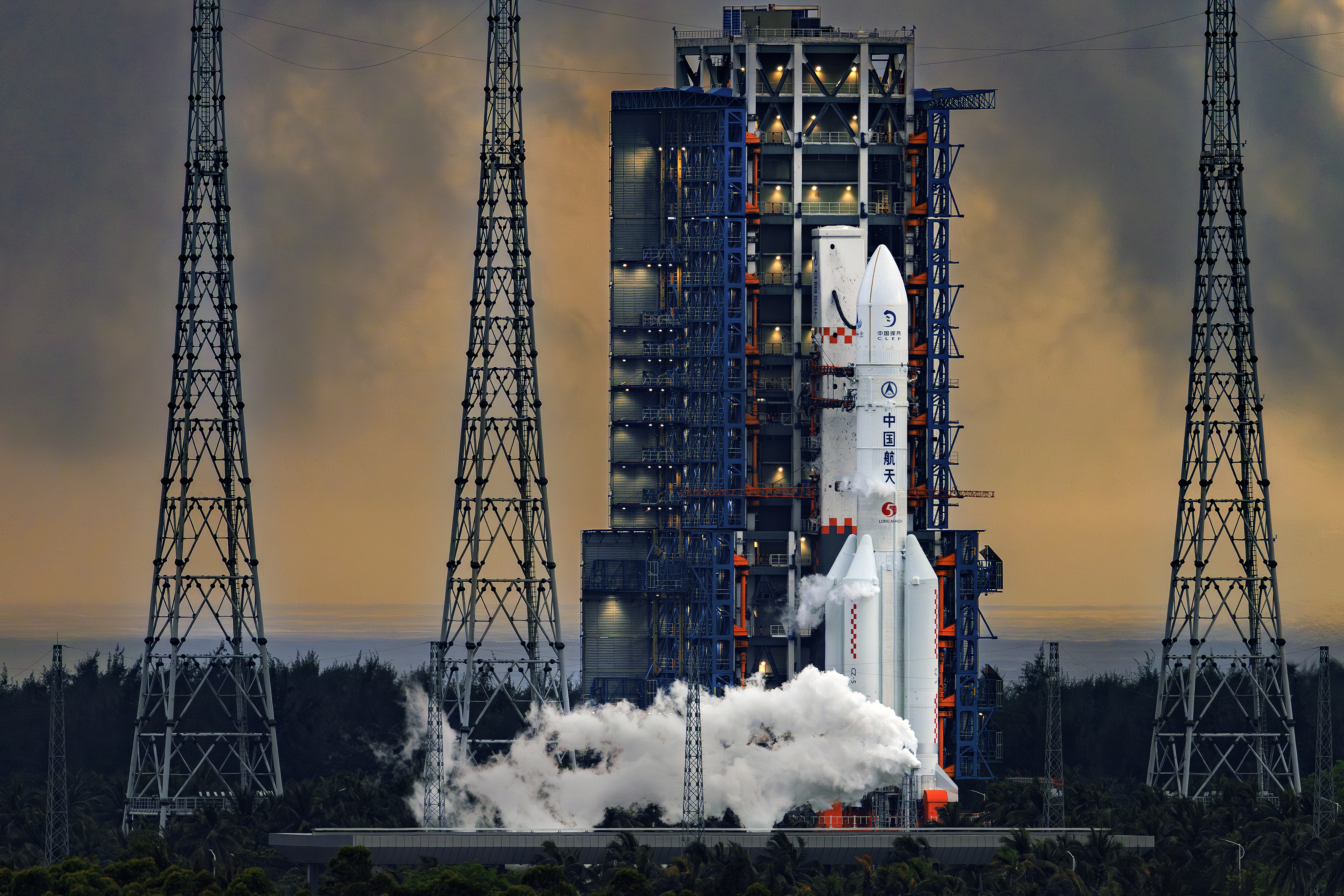
China launches the Chang'e-6 lunar probe atop the Long March-5 Y8 carrier rocket from the Wenchang Spacecraft Launch Site, May 3, 2024. /VCG

China launches the Chang'e-6 lunar probe atop the Long March-5 Y8 carrier rocket from the Wenchang Spacecraft Launch Site, May 3, 2024. /VCG

At the 69th International Astronautical Congress held in 2018, China announced that it would provide 10 kilograms of payload capacity on the Chang'e-6 mission for international cooperation. After careful evaluation, four international payloads were selected, including France's Detection of Outgassing RadoN (DORN), which is designed to measure radon and its decay products on the lunar surface, improve lunar gas transport models and enhance understanding of the physical properties of the lunar soil.

During French President Emmanuel Macron's visit to China in 2023, China gifted France with 1.5 grams of scientific lunar samples collected by the Chang'e-5 mission. These samples were subsequently allocated to over a dozen French research teams for detailed scientific study.

In June 2024, the Chang'e-6 probe carried France's DORN to the Moon's surface, marking the first Sino-French cooperation on lunar exploration and France's inaugural lunar landing project.
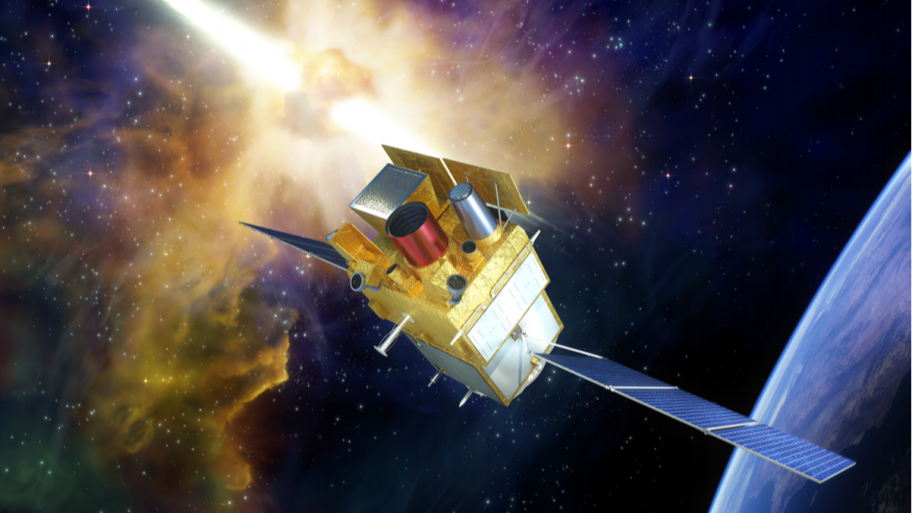
The Space-based Multi-band Variable Object Monitor, a joint space science satellite developed by China and France. /CMG

The Space-based Multi-band Variable Object Monitor, a joint space science satellite developed by China and France. /CMG

On June 22, 2024, China successfully launched the Space-based Multi-band Variable Object Monitor (SVOM) aboard a Long March-2C rocket from the Xichang Satellite Launch Center. The SVOM, a joint space science satellite developed by China and France, conducts coordinated observations of gamma-ray bursts (GRBs) to study their origins and physical properties. In-depth observations and studies of GRBs will help humanity better understand several fundamental problems in basic science.

The satellite released its first batch of scientific findings in 2025. One of the most impressive findings is the detection of a gamma-ray burst from 13 billion years ago, dating back to just 700 million years after the Big Bang. This discovery offers a unique glimpse into the infancy of the cosmos.
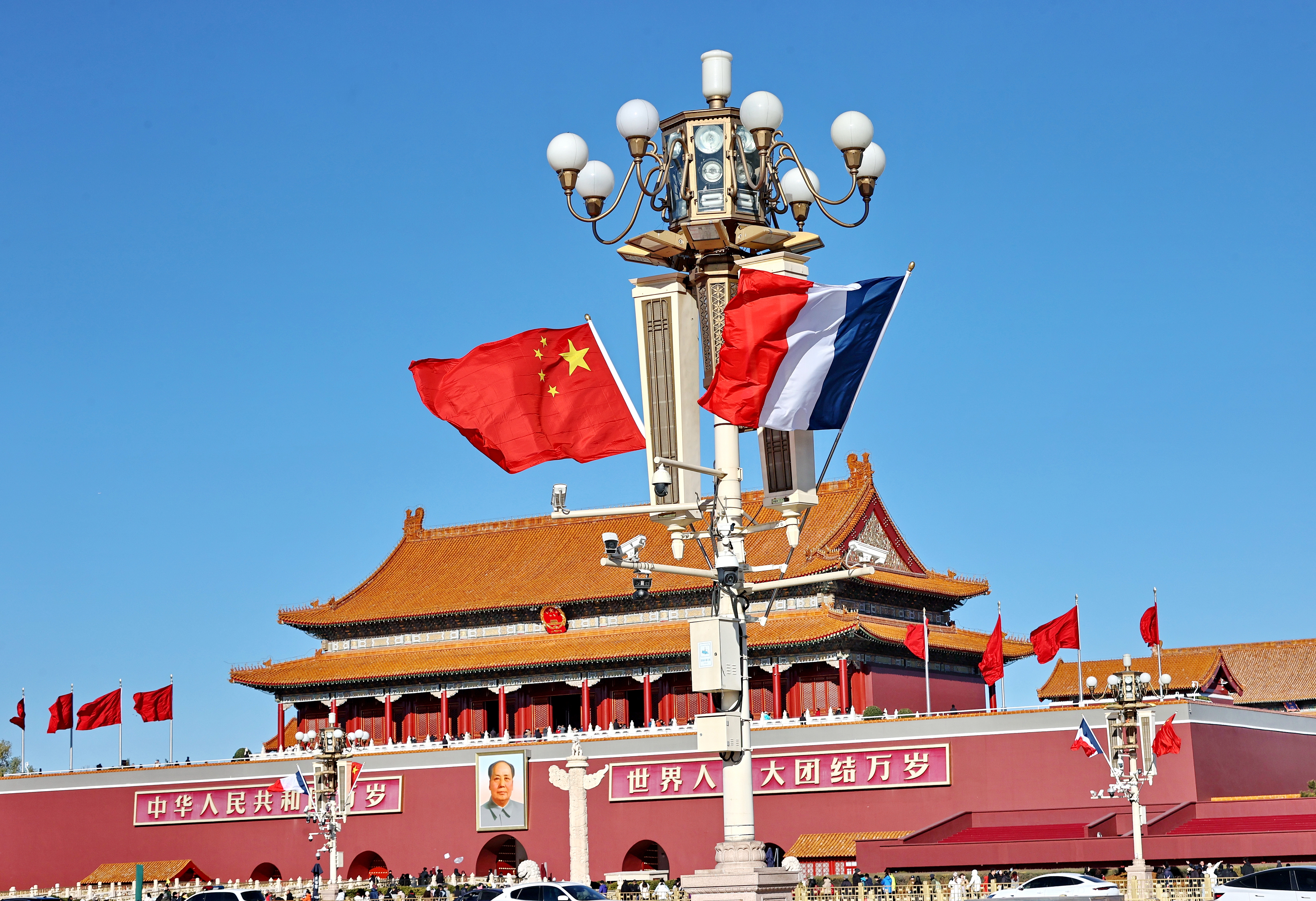
The national flags of China and France hang at Tiananmen Square in Beijing, December 4, 2025. /VCG

The national flags of China and France hang at Tiananmen Square in Beijing, December 4, 2025. /VCG

The French president is currently in Beijing for a state visit. 

During a joint press conference after his meeting with President Macron on Thursday, President Xi said China and France agreed to focus on four key areas, including consolidating cooperation in traditional fields such as aviation, space and nuclear energy, and expanding collaboration in emerging sectors including green economy, digital economy, biomedicine and artificial intelligence.


Original Text (This is the original text for your reference.)

China launches the SVOM aboard a Long March-2C rocket from the Xichang Satellite Launch Center. /CMG

China launches the SVOM aboard a Long March-2C rocket from the Xichang Satellite Launch Center. /CMG

China and France have maintained diplomatic ties for more than 60 years, with space cooperation spanning 48 years. The partnership traces back to 1977, when a Chinese aerospace technology delegation visited French aerospace research institutions, marking the beginning of long-term collaboration in the field.

Since the two governments signed a cooperation agreement in 1997, China and France have accelerated collaboration in earth observation, deep space exploration, satellite development, lunar exploration and manned spaceflight, achieving positive results.

A Long March-2C carrier rocket lifted off from the Jiuquan Satellite Launch Center on October 29, 2018, successfully placing the China–France Oceanography Satellite (CFOSat) into its preset orbit. This satellite was jointly developed by the China National Space Administration (CNSA) and France's Centre National d'Etudes Spatiales (CNES). It marked the transition from previous satellite import-export and launch service collaborations to joint satellite development and data sharing, establishing a significant milestone in the countries' space science partnership, representing a new phase in Sino-French space cooperation.

China launches the Chang'e-6 lunar probe atop the Long March-5 Y8 carrier rocket from the Wenchang Spacecraft Launch Site, May 3, 2024. /VCG

China launches the Chang'e-6 lunar probe atop the Long March-5 Y8 carrier rocket from the Wenchang Spacecraft Launch Site, May 3, 2024. /VCG

At the 69th International Astronautical Congress held in 2018, China announced that it would provide 10 kilograms of payload capacity on the Chang'e-6 mission for international cooperation. After careful evaluation, four international payloads were selected, including France's Detection of Outgassing RadoN (DORN), which is designed to measure radon and its decay products on the lunar surface, improve lunar gas transport models and enhance understanding of the physical properties of the lunar soil.

During French President Emmanuel Macron's visit to China in 2023, China gifted France with 1.5 grams of scientific lunar samples collected by the Chang'e-5 mission. These samples were subsequently allocated to over a dozen French research teams for detailed scientific study.

In June 2024, the Chang'e-6 probe carried France's DORN to the Moon's surface, marking the first Sino-French cooperation on lunar exploration and France's inaugural lunar landing project.

The Space-based Multi-band Variable Object Monitor, a joint space science satellite developed by China and France. /CMG

The Space-based Multi-band Variable Object Monitor, a joint space science satellite developed by China and France. /CMG

On June 22, 2024, China successfully launched the Space-based Multi-band Variable Object Monitor (SVOM) aboard a Long March-2C rocket from the Xichang Satellite Launch Center. The SVOM, a joint space science satellite developed by China and France, conducts coordinated observations of gamma-ray bursts (GRBs) to study their origins and physical properties. In-depth observations and studies of GRBs will help humanity better understand several fundamental problems in basic science.

The satellite released its first batch of scientific findings in 2025. One of the most impressive findings is the detection of a gamma-ray burst from 13 billion years ago, dating back to just 700 million years after the Big Bang. This discovery offers a unique glimpse into the infancy of the cosmos.

The national flags of China and France hang at Tiananmen Square in Beijing, December 4, 2025. /VCG

The national flags of China and France hang at Tiananmen Square in Beijing, December 4, 2025. /VCG

The French president is currently in Beijing for a state visit. 

During a joint press conference after his meeting with President Macron on Thursday, President Xi said China and France agreed to focus on four key areas, including consolidating cooperation in traditional fields such as aviation, space and nuclear energy, and expanding collaboration in emerging sectors including green economy, digital economy, biomedicine and artificial intelligence.

Comments

    Something to say?

    Login or Sign up for free

    Disclaimer: The translated content is provided by third-party translation service providers, and IKCEST shall not assume any responsibility for the accuracy and legality of the content.
    Translate engine
    Article's language
    English
    中文
    Pусск
    Français
    Español
    العربية
    Português
    Kikongo
    Dutch
    kiswahili
    هَوُسَ
    IsiZulu
    Action
    Related

    Report

    Select your report category *


    Reason *


    By pressing send, your feedback will be used to improve IKCEST. Your privacy will be protected.

    Submit
    Cancel